Ant Control
Local ant control in Highlands Reserve, Davenport. Course-adjacent fire ant pressure and fast-warming Lake Wales Ridge soils. Call (863) 236-9095.
Highlands Reserve is one of those communities that earns its name. Built atop the Lake Wales Ridge — one of the highest elevations in Florida, a narrow band of ancient sand dunes that runs through Polk County — the neighborhood sits above the surrounding landscape with golf course views, conservation woodland, and a settled, family-friendly feel that’s harder to find the closer you get to the I-4 corridor.
It’s also a community where fire ants are a consistent outdoor reality. The same sandy soil, warm sun exposure, and natural scrubland that makes Highlands Reserve’s golf course beautiful is ideal fire ant habitat. And for families with children using the community playground, the pool area, and the streets around Highlands Reserve Boulevard, knowing what to watch for isn’t optional — it’s part of living in Florida.
Here’s what Highlands Reserve homeowners need to know about ants in and around their community.
Most fire ant guides talk about lawns and landscaping. Highlands Reserve has a specific geography that’s worth understanding because it directly affects why ant pressure in this community is what it is.
The community sits on the Lake Wales Ridge — ancient sand dunes that create some of the highest elevations in Central Florida. Sandy, well-drained soil warms up faster than clay-heavy soil and holds that warmth longer. Fire ants thrive in warm, well-drained soil precisely because it allows colonies to establish deep, stable underground structures without the risk of flooding. The sandy substrate that gives Highlands Reserve its elevated, distinctive character is also the ideal building material for fire ant colonies.
Beyond the soil, Highlands Reserve’s layout creates several specific ant pressure points:
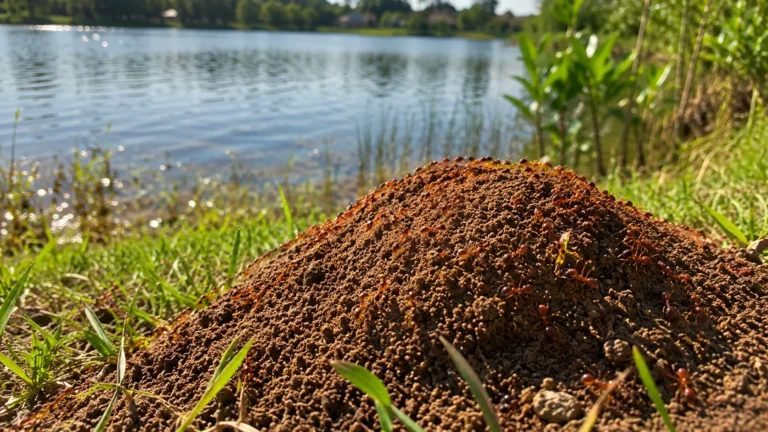
Golf course borders — Many of Highlands Reserve’s approximately 900 homes back directly onto the fairways and natural scrubland of the 18-hole golf course. The golf course’s irrigated turf is prime fire ant habitat, and colonies established on the course side regularly extend satellite nests into adjacent residential lots. If your home backs up to the course, you are in a higher fire ant exposure zone than homes closer to the community center.
Conservation and woodland areas — The natural scrubland and woodland that edges the golf course and portions of the community are undisturbed habitat where fire ant colonies establish and grow without regular management activity. These areas are primary colony sites that feed ongoing fire ant pressure into adjacent maintained spaces — lawns, walkways, and the areas around community amenities.
Community pool and playground area — The community pool, tennis court, and children’s playground near Highlands Reserve Boulevard are central gathering points for families. The maintained turf around these amenities — and the landscaping that borders them — are consistent areas of fire ant activity during peak season. Children playing near the edges of the playground equipment area or on the grass surrounding the pool are in regular contact with these spaces.
Residential streets and sidewalks — Highlands Reserve’s established streets have mature landscaping with garden beds and lawn areas that border the sidewalk. The transition zone between pavement and turf — where the sidewalk meets the grass — is a common fire ant mound location because the concrete edge creates a defined, partially sheltered boundary that colonies prefer.
For families with young children, the community playground at Highlands Reserve is one of the most important ant management considerations. Children using swings, slides, and climbing frames interact with the surrounding turf and landscaping in ways that put them in direct contact with ground-level ant activity.
The specific risks around playgrounds that parents should understand:
Mounds at the base of equipment — Fire ant colonies tend to establish near fixed structures — the base of a swing set post, around the border of a sandbox, near the edge of playground equipment footings. These are spots where soil is less disturbed by foot traffic but close enough to the action that children regularly step on or near them.
Grass border areas — Where playground rubber mulch or wood chip surfacing transitions to the surrounding grass is a consistent mound location. Children running from the equipment onto the grass frequently encounter this transition zone at speed — exactly when they’re least likely to notice what’s underfoot.
Speed of attack — Fire ants respond to disturbance within seconds. A child who steps on a mound can receive dozens of stings before they’ve moved away. Young children who fall near a mound are at serious risk. The stings are painful and can trigger significant reactions — particularly in children who have not previously been stung and don’t know their sensitivity level. Our fire ant stings guide covers what to watch for and when to seek medical attention.
After rain — New mounds appear most frequently in the 24 to 48 hours after significant rainfall. Davenport’s regular summer afternoon thunderstorms mean that playground areas that were clear on Monday may have new mound activity by Wednesday morning. Checking playground surrounds after any significant rain before children use the area is a simple habit that prevents most playground fire ant encounters.
Every home in Highlands Reserve has a screened pool — it’s a standard feature of the community. Pool decks, screened lanais, and the garden beds that border them are consistent fire ant encounter points, particularly for homes on golf course-adjacent lots.
Pool deck and equipment areas — Warm concrete absorbs heat and retains it longer than surrounding turf. Pool equipment pads, filter housings, and the area around pool heaters create warm, slightly elevated surfaces that fire ants forage near actively. Bare feet on a pool deck are a common sting scenario in Highlands Reserve during peak season.
Screened lanai borders — The garden beds immediately outside a screened lanai — typically bordered by the screen frame on one side and open landscape on the other — are a favored mound location. The screen frame itself provides a defined edge, and the soil in these beds is typically warm and partially sheltered. Mounds in lanai-adjacent beds can put fire ants within a few feet of the screened door.
Lawn areas near the back fence — For course-adjacent lots, the back fence line is the highest-risk zone on the property. Satellite colonies from the golf course side establish in the lawn near the fence line first, then expand toward the home as the colony grows. Regular inspection of the back fence area — particularly after rain and during peak fire ant season — catches problems at Stage 1 before they reach Stage 3 perimeter pressure.
Mulched garden beds — Highlands Reserve’s established landscaping frequently includes mulched garden beds around the home’s foundation and along walkways. Organic mulch holds moisture and provides ideal conditions for fire ant colony establishment. Pulling mulch back at least six inches from the foundation and inspecting beds regularly during spring and fall activity spikes reduces mound establishment near the home significantly.
A pattern we hear regularly from Highlands Reserve homeowners: they treat a mound, the mound is gone, and within a few weeks a new mound appears nearby. Sometimes in the same spot. Sometimes slightly closer to the house.
This is not a treatment failure — it’s a source problem. Individual mound treatment addresses the visible colony. It doesn’t address the source colony on the golf course side, in the conservation woodland, or in the neighboring lot. As long as the pressure source is active, new satellite colonies will continue to establish in your lawn.
The solution to recurring Highlands Reserve fire ants requires addressing two things simultaneously: the visible mound and the ongoing forager pressure from the source colony. That means combining individual mound treatment with broadcast granular bait applied across the full lawn — so that foraging workers from both the visible colony and any emerging satellite colonies carry the slow-acting bait back to the queen before a new mound becomes visible.
For course-adjacent and woodland-adjacent lots in Highlands Reserve, quarterly treatment on a prevention plan is the approach that actually stops the cycle rather than managing it reactively one mound at a time.
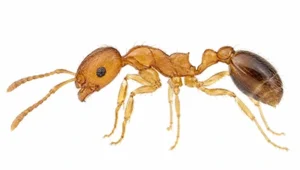
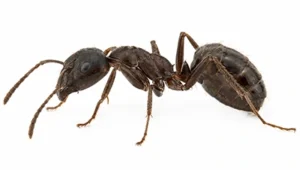
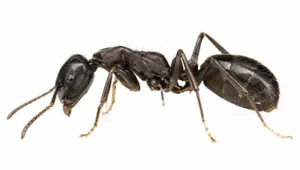
Highlands Reserve’s established landscape and proximity to natural conservation areas means you’re likely to encounter more than one ant species on your property. Not all of them are fire ants, and correctly identifying what you have matters because the treatment approach differs.
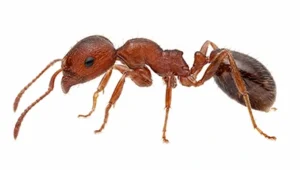
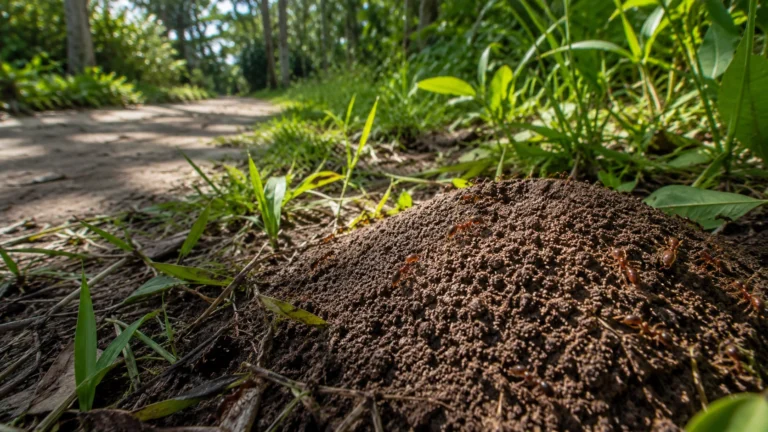
Fire ants — The primary outdoor concern. Reddish-brown, 1/8 to 1/4 inch, dome-shaped mounds in open lawn areas. Aggressive when disturbed.
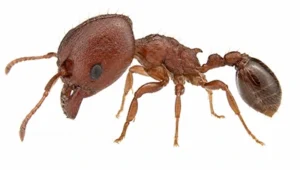
Big-headed ants — Common in Davenport’s sandy soil conditions. Named for the major worker’s disproportionately large head. They trail along pavement edges and disturb soil near driveways and sidewalks. Less aggressive than fire ants but a sign of an established colony that benefits from professional treatment.
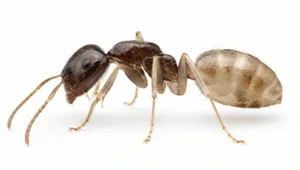
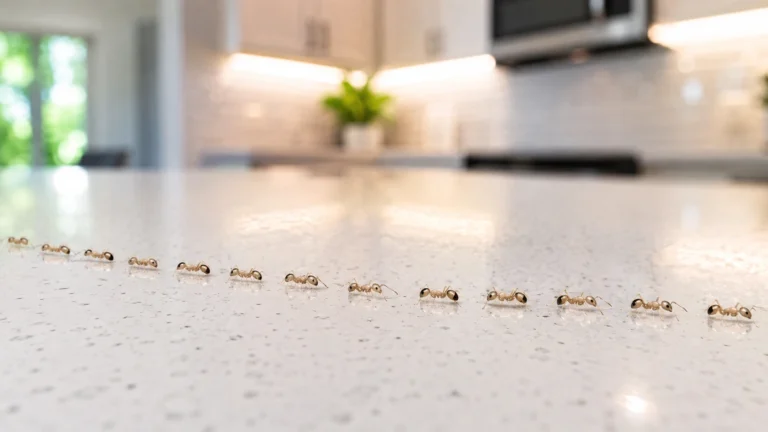
Ghost ants — Tiny, nearly translucent ants that appear indoors rather than in the yard. If you’re seeing very small pale ants trailing across your kitchen counter or bathroom, that’s a separate issue from the outdoor fire ant pressure and requires a completely different treatment approach. Read our ant identification guide for help telling species apart before you treat.
An effective Highlands Reserve ant treatment accounts for the community’s specific geography — the sandy soil, the golf course and woodland adjacency, and the family-use outdoor spaces that need to be safe for children and pets.
For most Highlands Reserve homes, treatment combines:
Perimeter barrier treatment — Applied around the foundation and extended to the back fence line for course-adjacent lots. This creates a protective zone that intercepts foraging workers before they establish new satellite colonies near the home.
Broadcast granular bait — Applied across the full lawn to address forager populations from both visible and emerging colonies. Particularly important for lots with ongoing pressure from course and woodland borders.
Individual mound treatment — Any active mounds treated directly in combination with the above for complete coverage. Our fire ant treatment service applies all three components calibrated to your lot’s specific exposure.
Most Highlands Reserve homeowners see significant reduction in fire ant activity within 3 to 5 days. A quarterly prevention plan keeps the protection active through Davenport’s year-round pressure cycle — because Highlands Reserve’s proximity to natural habitat means the pressure source doesn’t go away between treatments.
Highlands Reserve is a community built around outdoor living — the golf, the pool, the playground, the streets where kids ride bikes and families take evening walks. Fire ants are part of the Florida landscape that comes with that lifestyle, but they don’t have to be part of your backyard, your pool deck, or your children’s playground.
If you’re seeing fire ant mounds in your Highlands Reserve yard — or you want to protect your outdoor spaces before mounds appear — call us. One visit assesses your lot’s specific exposure and applies the right treatment for Highlands Reserve’s particular ant pressure dynamics.
Same-day service available. Serving Highlands Reserve, Providence, Ridgewood Lakes, and the surrounding Davenport area.
Highlands Reserve is part of our broader Davenport service area — see every Davenport neighborhood we serve and how ant pressure differs across the city.
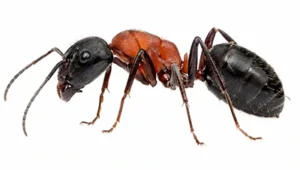
Common ant species in the Highlands Reserve area. Tap any species to learn how we treat it.