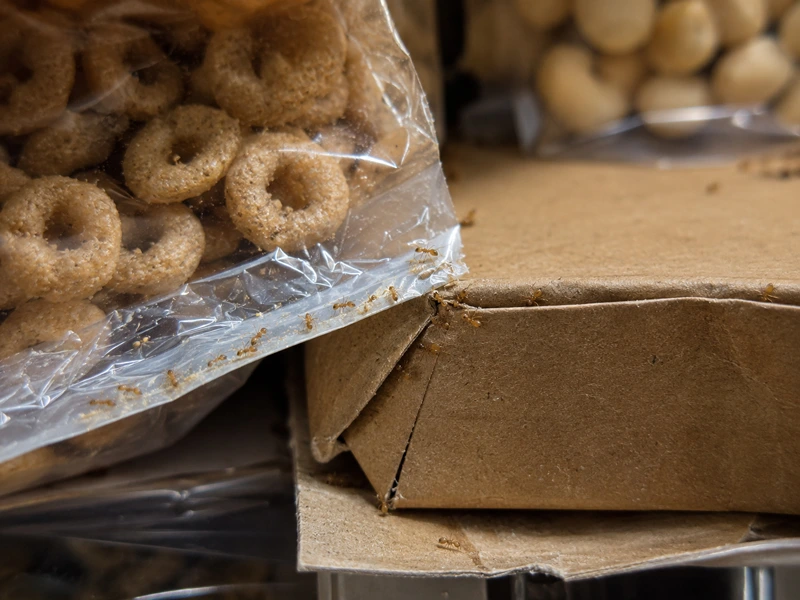
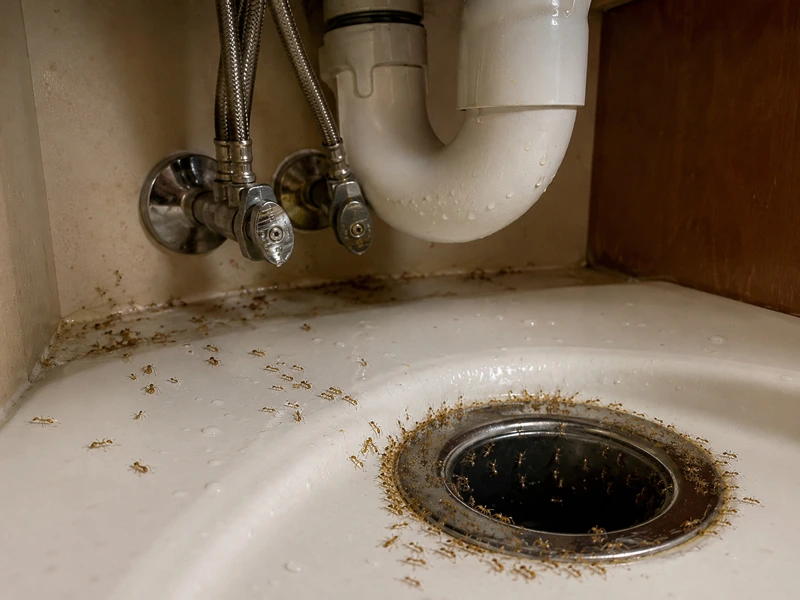



Most ant problems get worse if you ignore them. Pharaoh ants are different — they get worse if you treat them incorrectly. And the most common treatment Davenport homeowners reach for first — a can of ant spray — is precisely the wrong approach for this specific species.
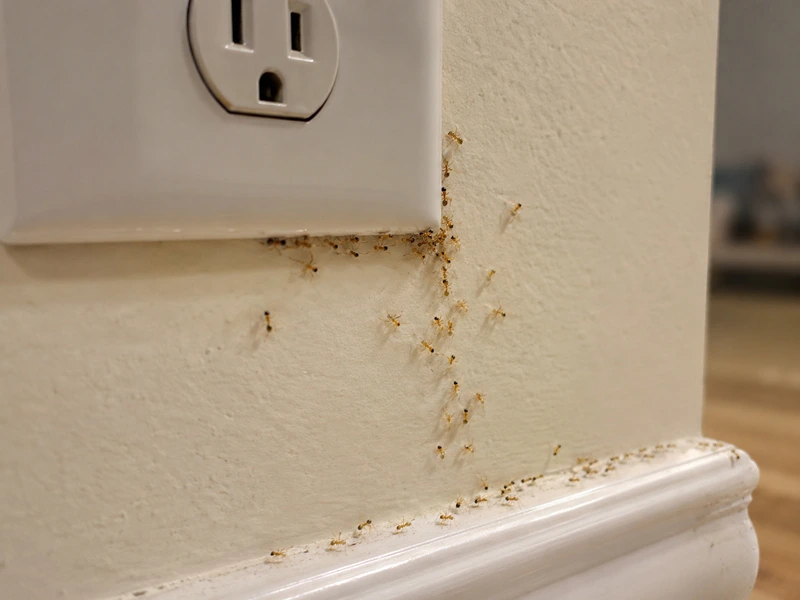
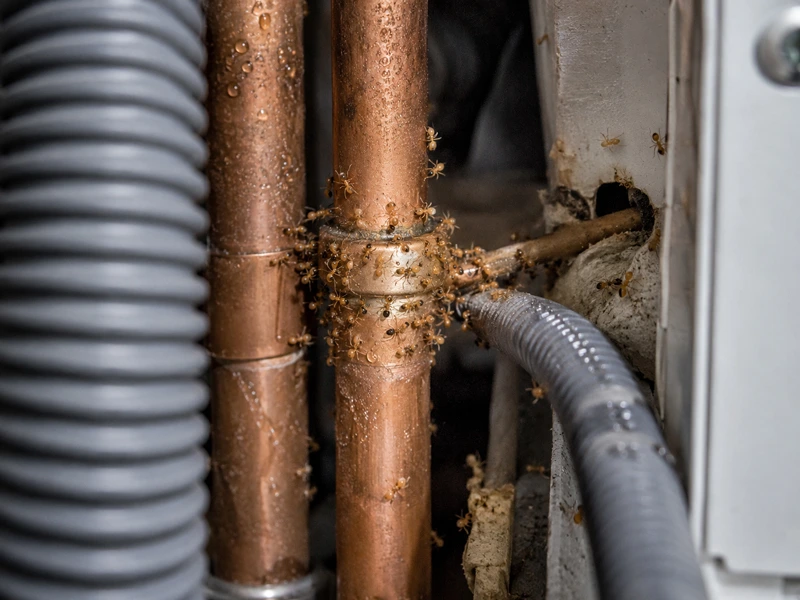
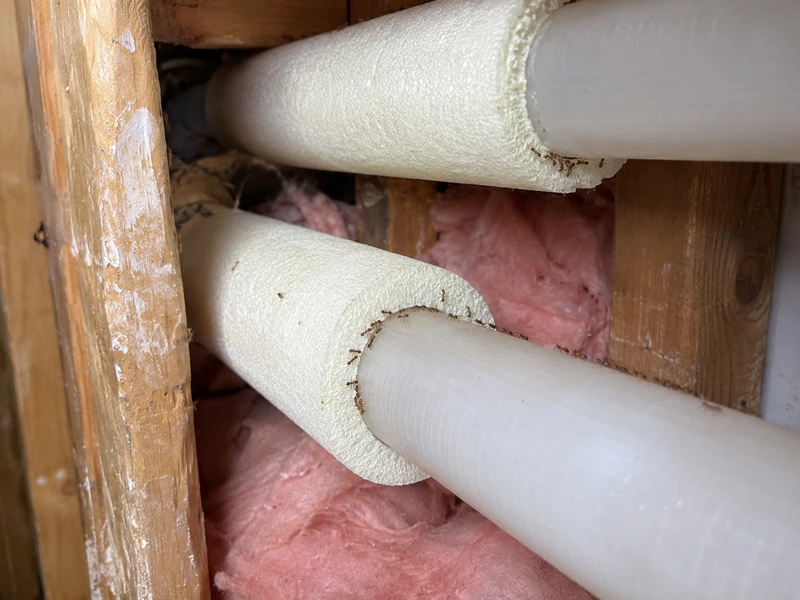
Pharaoh ants (Monomorium pharaonis) are tiny, pale golden-yellow ants, roughly the size of a grain of sugar, that live almost exclusively indoors in Florida. They nest in warm, humid wall voids near hot water pipes, behind appliances, inside electrical outlets, and in any protected cavity where temperatures sit around 80–86°F. Unlike most ant species, pharaoh ants never swarm — new colonies form entirely by budding. A queen and a small group of workers split off from the main colony and establish a new nest somewhere else in the structure. This is normal colony behavior. It is also exactly what happens when a pharaoh ant colony is sprayed with a repellent insecticide — except instead of one controlled split, the colony fragments into dozens of new sub-colonies simultaneously, each establishing new trails to food and water sources in rooms that weren’t previously affected.
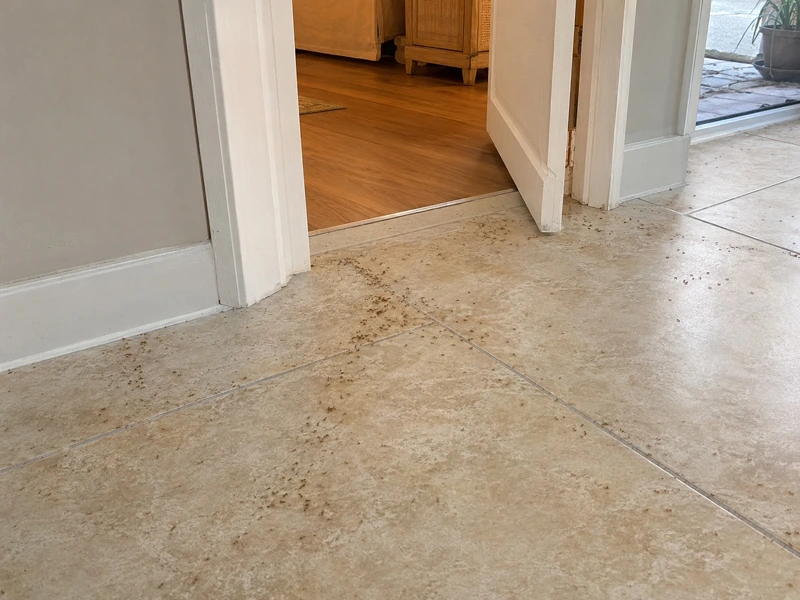
This is why homeowners who spray pharaoh ants describe the same experience: treat the kitchen trail, it disappears, new trails appear in the bathroom and bedroom within a week. Treat those, new trails appear in the laundry room and hallway. The infestation expands with each treatment until ants are visible throughout the home. At that point, the problem is no longer just the original infestation — it’s the original infestation plus every budded colony created by the spray treatments. University of Florida IFAS Extension explicitly warns against pyrethroid sprays for pharaoh ants and labels them the most difficult household ant to control in Florida.
In Davenport, pharaoh ants are particularly common in vacation rental properties, townhomes, condos, and apartments — attached dwellings where wall voids, plumbing chases, and electrical conduit are shared between units. A pharaoh ant colony established in one unit moves through shared infrastructure to adjacent units, and treating only one unit while neighboring units remain untreated ensures rapid reinfestation. If your Davenport property is a short-term rental or shares walls with adjacent units, this is a critical consideration — pharaoh ants don’t recognize property lines any more than they recognize spray barriers.

Ready to Take Back Your Home?
Beyond being a severe nuisance, pharaoh ants have been documented as a significant contamination risk in research and healthcare settings. A landmark study published in the Lancet isolated Salmonella, Pseudomonas aeruginosa, Staphylococcus, and Clostridium from pharaoh ants collected in hospitals — they had been found crawling in and out of wounds, IV bags, and sterile packaging. In a private home the risk level is lower than in a clinical setting, but the same bacterial transfer potential exists anywhere pharaoh ants have access to food preparation surfaces, infant feeding areas, or the belongings of immunocompromised individuals. This is not an ant you want to simply wait out.
The only approach that works is slow-acting non-repellent bait — placed in many small amounts along every active foraging trail, in every room where ants have been seen, simultaneously. The bait must be slow-acting so workers return to the nest and share it with the colony before dying. Fast-kill products defeat the purpose — workers die before reaching the nest and the queens remain unaffected. The bait must also be rotated between sweet, protein, and fat formulations because pharaoh ants switch dietary preferences by season and colony stage — a sweet bait ignored one week may be taken readily the next, and a professional treatment plan accounts for this.
In attached dwellings and vacation rental properties, a building-wide baiting approach is required — treating only one unit guarantees reinfestation from adjacent units. Our indoor ant control service is designed specifically for the interior, multi-room, multi-nest treatment that pharaoh ants require. For vacation rental owners protecting a revenue-generating property from a guest-experience problem, our prevention plan maintains scheduled interior monitoring and treatment on a cycle that doesn’t depend on guest occupancy or management visit frequency.
If you’ve already sprayed and the infestation has spread to multiple rooms, don’t spray again. Call us. We’ll assess the full extent of the infestation, map the active trail network, and apply a building-appropriate bait treatment that works with pharaoh ant biology rather than against it. For context on how pharaoh ants compare to ghost ants — another tiny pale indoor species that is frequently confused with them — our ant identification guide covers the distinguishing features side by side.
Same-day service available throughout Davenport, ChampionsGate, Solterra, Reunion Resort, and the surrounding area.