
How Dangerous Are Fire Ant Stings in Davenport?
Published May 8, 2026 · Updated May 8, 2026
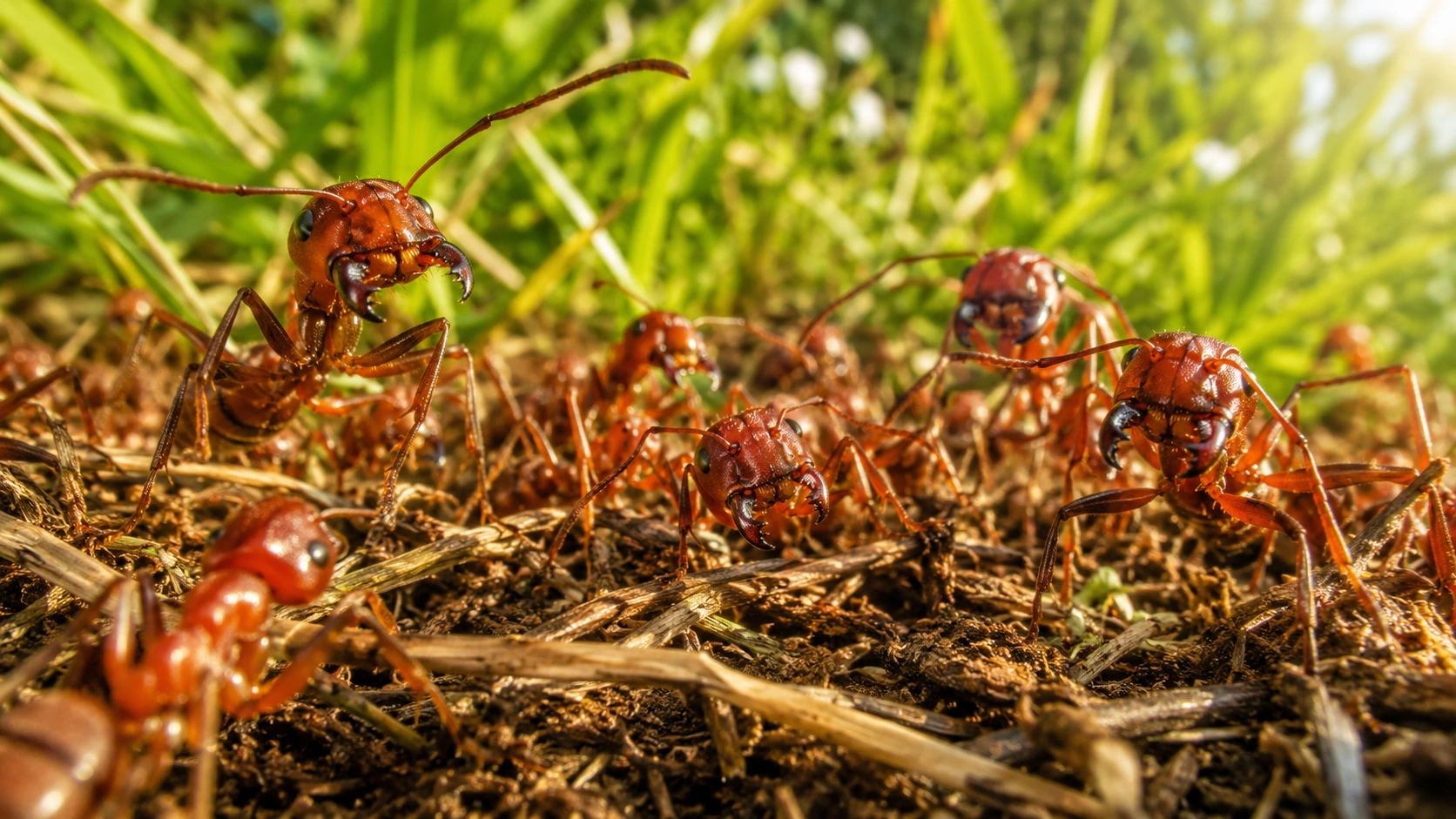
Most people who’ve been stung by fire ants describe it the same way: it’s immediate, it’s sharp, and it’s followed by a burning sensation that’s hard to ignore. That’s where the name comes from. But fire ant stings in Davenport are more than just painful. For certain people — and for children and pets especially — they can be genuinely dangerous.
If you have fire ant mounds in your yard and kids or animals who use that space, this is information worth having before an incident happens rather than after.
Here’s what fire ant stings actually do, what signs to watch for, and what protecting your Davenport yard from fire ants actually looks like.

Ready to Take Back Your Home?
What Happens When a Fire Ant Stings You
Fire ants are unique among stinging insects in a way that surprises most people. They don’t just sting once and move on. A single fire ant will sting repeatedly — pivoting around its mandibles, which it uses to grip the skin, and stinging in an arc pattern multiple times in a single encounter. In a typical fire ant attack, dozens or hundreds of ants sting simultaneously.
The sting itself delivers a venom called solenopsin, an alkaloid compound that causes the immediate burning pain fire ants are known for. Within a few hours, a white pustule typically forms at each sting site — a characteristic reaction to solenopsin that distinguishes fire ant stings from most other insect stings. These pustules are not infected. They’re a normal localized reaction. They last several days and are intensely itchy.
The important thing to know about fire ant stings in Davenport is that a single incident rarely involves a single sting. Fire ant colonies are aggressive and respond to disturbance within seconds. A child who steps on or near a mound can receive dozens of stings before they’ve even registered what’s happening. An adult who doesn’t move quickly can receive hundreds.
Who Is Most at Risk From Fire Ant Stings
For healthy adults, fire ant stings are painful and irritating but not typically dangerous beyond the localized reaction. The population at significantly elevated risk includes:
Young children — A toddler who stumbles into a mound has a limited ability to move away quickly and a smaller body mass that receives a higher concentration of venom per pound of body weight. Children under five are the highest-risk group for serious fire ant sting incidents in Florida.
Infants and non-mobile individuals — Anyone who cannot physically remove themselves from an attack is at severe risk. Infants in outdoor play areas, elderly individuals with mobility limitations, and individuals with disabilities who may not be able to respond quickly are in this category.
Pets — Dogs and cats are frequently stung when they disturb mounds while exploring the yard. Small dogs are at greater risk simply because of their size. Pets cannot communicate what’s happening and may not move away from a mound before sustaining significant stings. Outdoor cats and dogs who spend time in the yard in Davenport are at genuine ongoing risk if mounds are present.
Individuals with venom allergies — This is the most serious risk category. An estimated 0.4 to 0.8 percent of the general population has a severe allergy to fire ant venom specifically. For these individuals, a fire ant sting attack can trigger anaphylaxis — a life-threatening systemic allergic reaction that requires immediate emergency medical treatment.
Signs of a Serious Reaction — When to Seek Medical Help Immediately
For most people, fire ant stings result in localized pain, swelling, and the characteristic white pustules. These are uncomfortable but self-resolving.
The signs that indicate a serious reaction requiring emergency medical attention are:
- Hives or flushing beyond the sting sites — Redness or raised welts spreading across areas of the body that weren’t stung
- Swelling of the face, lips, or throat — Any swelling around the airway is an emergency
- Difficulty breathing or wheezing — A sign that the airway is compromised
- Rapid heartbeat or drop in blood pressure — Signs of anaphylactic shock
- Dizziness, confusion, or loss of consciousness — Systemic reaction affecting neurological function
- Nausea, vomiting, or severe abdominal cramping — Can accompany anaphylaxis in some individuals
If any of these symptoms appear following a fire ant sting attack — particularly in a child, pet, or elderly individual — call 911 immediately. Do not wait to see if symptoms improve. Anaphylaxis progresses rapidly and requires epinephrine to reverse.
According to the University of Florida IFAS Extension, fire ants are responsible for millions of stings annually in the southeastern United States and are the leading cause of insect sting-related emergency room visits in Florida.
Ready to Take Back Your Home?
How to Treat a Fire Ant Sting
For typical fire ant stings without signs of serious allergic reaction:
Move away from the mound immediately. The priority in any fire ant encounter is to leave the area quickly and brush ants off rather than swatting — swatting presses mandibles deeper into the skin.
Wash the affected area with soap and water. This removes any remaining venom on the skin surface and reduces secondary infection risk.
Apply a cold compress. Cold reduces swelling and temporarily numbs the burning sensation. A bag of ice wrapped in cloth applied for 10 to 15 minutes provides meaningful relief.
Resist scratching the pustules. The white pustules that form within hours are not infected and will resolve on their own in 3 to 10 days. Breaking them open through scratching significantly increases infection risk. Keep the area clean and leave them intact.
Antihistamines and hydrocortisone cream can reduce itching and localized swelling. Over-the-counter options are appropriate for typical reactions.
Watch for 30 minutes — The window for an allergic reaction to develop is typically within 30 minutes of the sting. If any systemic symptoms appear during this window, seek emergency care immediately.
For children who have been stung multiple times, a call to your pediatrician is appropriate even without obvious signs of allergic reaction. High sting counts in small children can cause significant cumulative venom exposure.
What to Do If Your Pet Gets Stung
Pets can’t tell you they’ve been stung, so knowing what to watch for matters.
Signs that your dog or cat has encountered a fire ant mound:
- Sudden yelping, pawing at the face, or frantic behavior outdoors
- Visible ants on the animal’s paws, face, or underbelly
- Swelling around the face or muzzle
- Hives visible through the coat
- Vomiting, weakness, or collapse
If your pet shows any signs beyond minor irritation following a fire ant encounter, contact your veterinarian immediately. Animals can experience anaphylaxis from fire ant venom just as humans can, and small dogs are at particular risk.
Rinse the affected area with water if the animal will allow it, and move them indoors away from the mound. Do not apply human antihistamines or topical treatments without veterinary guidance — dosing for pets is different and some human products are toxic to animals.
How Fire Ant Mounds Form in Davenport Yards
Understanding how fire ant mounds develop helps you catch them early — before the colony is large enough to pose a serious sting risk.
Fire ant colonies in Davenport begin underground from a single mated queen. In the first few months, the colony is small and the mound may be barely visible — a slightly disturbed patch of soil that’s easy to dismiss. As the colony grows, the mound becomes more visible: a domed, irregular mound of loose, fluffy soil with no visible entry hole at the top.
A mature fire ant colony in Davenport can contain between 100,000 and 500,000 workers. At that size, disturbing the mound — even by walking close to it — triggers an immediate defensive response from hundreds of ants simultaneously.
Peak mound formation occurs during fire ant season — March through May in Davenport — and again during a secondary activity spike in September and October. New mounds appear fastest after rain, when queen ants use the moist, soft soil to establish new colonies. If you notice new mounds appearing regularly after Davenport’s afternoon thunderstorms, that’s why.
Protecting Your Davenport Yard From Fire Ant Stings
The most effective protection against fire ant stings is eliminating the mounds before an incident occurs. Here’s what that looks like:
Individual mound treatment addresses existing mounds but leaves the surrounding lawn vulnerable to new colony establishment. For yards with one or two visible mounds, targeted mound drench or granular treatment is a starting point — but it’s not a complete solution.
Broadcast granular bait applied across the full lawn targets the entire fire ant population, not just the visible mounds. Foraging workers carry the slow-acting bait back to the queen, eliminating colonies before they produce visible surface mounds. This is the most effective approach for Davenport yards with recurring fire ant pressure.
Professional perimeter and lawn treatment combines both approaches and is timed to the Davenport seasonal cycle — applied before the March–May peak and again before the September–October spike. This is the treatment approach that keeps yards consistently protected rather than reactive.
For families with young children or pets, we strongly recommend not waiting for a sting incident before acting. One mound you didn’t see can produce a significant sting event before you have time to respond.
Visit our fire ant treatment service page to see exactly what our Davenport treatment process looks like, and read our fire ant season guide to understand when your yard is at highest risk and what proactive treatment timing looks like.
If you’re not sure whether what you’re seeing is fire ants or another species, our ant identification guide will help you confirm before you take any action.
Don’t Wait for a Sting to Act
Fire ant stings in Davenport are preventable. Mounds don’t appear overnight — they develop over weeks and months from colonies that were established long before the mound became visible. A yard inspection today can identify fire ant pressure before it becomes a sting incident tomorrow.
If you’re seeing mounds, new soil disturbance in your lawn, or fire ants trailing near play areas or pet spaces, call us. Same-day service available throughout Davenport, Haines City, ChampionsGate, Winter Haven, and surrounding areas. One call gets a technician to your yard to assess, treat, and protect your family before an incident happens.