Ant Control
Local ant control in Providence, Davenport. Conservation borders and dog-park turf drive year-round fire ant pressure. Call (863) 236-9095.
One of the best things about living in Providence is how much there is to do without ever leaving the gates. The walking and cycling trails that wind through 2,200 acres of Florida landscape, the dog park, the golf course, the playgrounds, the aquatic center — Providence was designed to be lived in, not just slept in. It’s the kind of community where you actually use your neighborhood.
Which means you’re outside a lot. And in Davenport, being outside a lot means sharing space with fire ants.
Providence Davenport ants — particularly fire ants along the community’s trails, near the dog park, and in lawn areas adjacent to the golf course — are a year-round reality for residents who use the community’s outdoor amenities. This guide is for Providence homeowners who want to enjoy every trail, every round, and every walk to the dog park without fire ants turning it into an unpleasant experience.
Providence was built to take advantage of the natural Florida landscape. That’s what makes it beautiful — and that’s also what makes fire ant management an ongoing reality for the community.
Fire ants thrive in exactly the conditions that make Providence’s outdoor spaces so appealing:
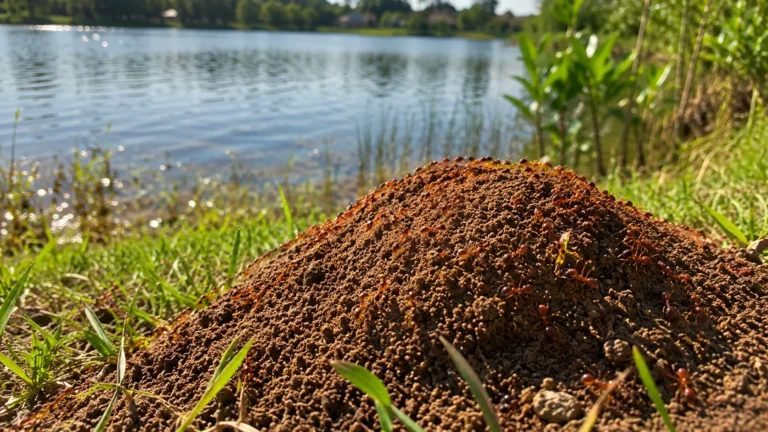
Open walking and cycling trails — The trails that wind through Providence run through open, sun-exposed areas with warm soil on both sides. Fire ants strongly prefer open sunny ground, and the maintained edges of walking trails — where manicured grass meets natural vegetation — are prime mound-building territory. Mounds along trail edges are easy to step on because they sit right where trail users naturally walk.
The dog park — Open turf, regular foot traffic, and the soil disturbance that comes with active use make dog parks a consistent fire ant hotspot. Dogs who explore the edges of the dog park enclosure — where the fence meets the natural ground — are at particular risk. A dog who steps on or sniffs at a mound can receive dozens of stings before the owner registers what’s happening.
Golf course adjacency — Providence’s Michael Dasher-designed 18-hole golf course covers a significant portion of the community’s 2,200 acres. As with any irrigated golf course in Central Florida, the course itself carries fire ant pressure. Residential lots that back up to the course or border its landscaped edges are in a higher exposure zone — colonies established on the course side regularly extend satellite nests into adjacent residential lawns.
Playgrounds and aquatic center surrounds — The areas around Providence’s playgrounds and aquatic center are maintained turf environments that children use daily. Fire ant mounds in or near play areas represent a genuine safety risk, particularly for young children who may not recognize a mound before disturbing it.
Natural conservation areas — Providence’s natural Florida landscape includes conservation areas and retention zones where vegetation is left more natural. These areas are ideal fire ant habitat — undisturbed soil, warm sun exposure, and less maintenance activity means colonies can establish and grow unnoticed until they expand into adjacent maintained areas.
If you walk, run, or cycle Providence’s trails regularly — or if you take your dog to the dog park — knowing what to look for keeps a routine outdoor experience from becoming a painful one.
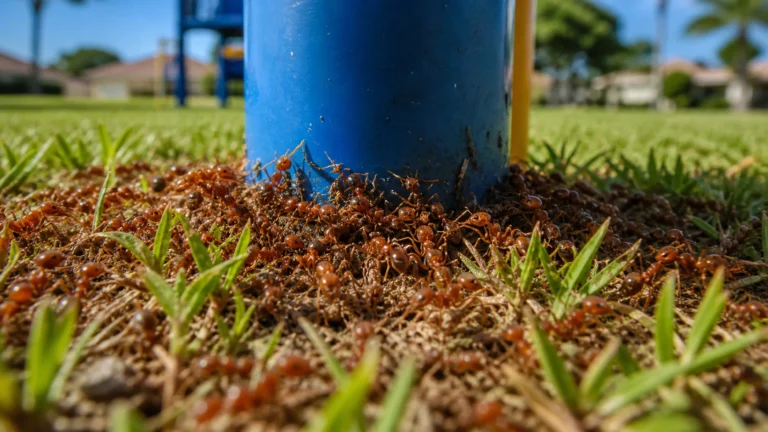
Trail edge mounds — The most common fire ant encounter on Providence’s trails happens at the edge where the maintained path meets the grass or natural vegetation border. Mounds in this transition zone can be low and flat — easy to step on before you’ve noticed them. Look for disturbed, loose soil that appears slightly different in texture from the surrounding ground. The classic dome shape is more visible in open lawn areas; trail edge mounds are often partially obscured by grass.
After afternoon storms — Davenport’s summer storm pattern — afternoon thunderstorms rolling through regularly from June through September — is a fire ant trigger. Rainfall softens the soil and stimulates new mound establishment. The morning after a significant storm, new mounds often appear on trails and in lawn areas that looked clear the day before. Be especially watchful on post-storm trail walks.
Spring and fall activity spikes — Fire ant pressure in Providence follows Davenport’s seasonal pattern. The March through May window is peak fire ant season — colonies expand aggressively and new mounds appear quickly. A secondary spike hits in September and October as colonies that went deeper during summer heat resurface. These are the two periods where trail users and dog park visitors should be most vigilant.
Around signage and fixed structures — Fire ant colonies on trails tend to establish near fixed objects — the base of trail markers, around benches, near fence posts at the dog park perimeter. These are spots where soil is less disturbed by foot traffic and where the structure itself provides some shelter. Make a habit of checking the ground near these fixtures before stopping.
The ant pressure you encounter on Providence’s trails and amenity areas doesn’t stay there. The same conditions that create fire ant activity in the community’s common spaces — irrigated turf, warm soil, open sun exposure — apply equally to your individual residential lot.
Providence homes sit on maintained lots with landscaped gardens, screened lanais, pool decks, and in many cases direct adjacency to the golf course or natural conservation areas. Each of these features creates its own ant exposure dynamic:
Landscaped garden beds — Mulch in garden beds is one of the most favorable environments for fire ant colony establishment. Organic mulch holds moisture, moderates soil temperature, and provides cover for colony activity that’s easy to miss until a mound becomes visible. Pulling mulch away from direct contact with your foundation is one of the most effective preventive steps a Providence homeowner can take.
Pool deck areas — The warm concrete of a pool deck and the moisture around pool equipment and drainage are consistent fire ant attractants. Pool deck encounters are particularly common because people use these areas barefoot — and a fire ant sting on bare skin is more severe than one through a shoe.
Lawn areas near conservation borders — If your Providence lot backs up to a natural conservation area or retention zone, you are at elevated fire ant risk. These undisturbed natural areas are primary colony habitat, and satellite colonies regularly establish in the maintained lawn of adjacent residential properties. The mound that appears in your backyard near the fence may have originated from a colony in the conservation area behind it.
Golf course adjacent lots — As with ChampionsGate, Providence lots that border the golf course experience ongoing fire ant pressure from the course side. Professional turf management on the course addresses mounds on the playing surface, but that treatment doesn’t extend to your residential lawn. New satellite colonies from the course side re-establish in adjacent lots regularly — which is why individual mound treatment alone is rarely sufficient for course-adjacent homes.
Providence was designed with active families in mind — multiple playgrounds, a kid’s play area, an aquatic center, a dog park. The community’s outdoor amenities are built around the assumption that children and pets will use them regularly.
That makes fire ant awareness particularly important for Providence families. Children playing near trail edges, running through lawn areas, or exploring near landscaping beds can encounter mounds before an adult notices them. Dogs at the dog park, on leash walks through the community, or exploring the yard are at risk any time they move through open turf areas.
For families with young children or dogs, protecting your residential lot is the first line of defense. The community manages common areas, but what happens on your lot is your responsibility — and a fire ant mound in your backyard near the play area or pool is a problem that won’t wait for a convenient treatment window.
For a clear understanding of what fire ant stings actually do and when to seek medical attention — particularly for children and smaller dogs — read our fire ant stings guide.
The most common approach Providence homeowners take to fire ant management is reactive — treat the mound when you see it, and move on. In a community like Providence, where ongoing pressure from the golf course, conservation areas, and common green spaces creates a consistent source of new colony establishment, this approach is a losing battle.
Here’s why:
Individual mound treatment addresses the visible colony but doesn’t eliminate the pressure source. If the colony originated from the golf course side or from a conservation area behind your lot, treating your mound doesn’t stop new satellite colonies from establishing in the same location within weeks. You treat the same area repeatedly without ever solving the problem.
Broadcast bait treatment — applied across the full lawn rather than to individual mounds — is more effective for Providence homeowners in high-pressure zones because it targets foraging workers across the entire lawn, not just at a single mound location. Workers carry the slow-acting bait back to the colony, eliminating it at the source. Read more about how timing and approach affects results in our fire ant season guide.
For Providence homeowners in course-adjacent or conservation-adjacent lots, the most effective long-term approach is a quarterly prevention plan that maintains an active perimeter barrier through all four seasons — not just during peak activity windows. Because Providence’s year-round pressure doesn’t take a break between seasons, your protection shouldn’t either.
A professional fire ant treatment for a Providence home accounts for the specific exposure dynamics of your lot — not a generic approach designed for a standard suburban property.
For most Providence homeowners, an effective treatment combines three components:
Perimeter barrier treatment — Applied around the foundation and extended to the fence line or property boundary in course-adjacent and conservation-adjacent lots. This closes the entry corridor that foraging workers use to move from pressure source areas onto your property.
Broadcast granular bait — Applied across the full lawn to target foraging worker populations before mounds become visible. Particularly important for lots with ongoing pressure from adjacent areas.
Individual mound treatment — For any visible active mounds, targeted treatment is applied in addition to the broadcast approach. Our fire ant treatment service combines all three for complete coverage tailored to your lot’s specific exposure level.
Most Providence homeowners see significant reduction in fire ant activity within 3 to 5 days of treatment. A follow-up prevention plan keeps the protection active through Davenport’s year-round pressure cycle.
Providence is one of the most genuinely livable communities in Davenport. The trails, the golf, the dog park, the green space — it’s a community that rewards people who actually spend time outdoors. Fire ants are part of the Florida landscape that comes with that outdoor lifestyle, but they’re not something you have to accept as an ongoing problem on your own property.
If you’re seeing fire ant mounds in your Providence yard, near your pool, or in your garden beds — or if you want to get ahead of the season before mounds appear — one call gets a technician out to your home to assess your lot’s specific exposure and apply the right treatment.
Same-day service available. Serving Providence, Highlands Reserve, and the surrounding Davenport area.
Providence is part of our broader Davenport service area — see every Davenport neighborhood we serve and how ant pressure differs across the city.
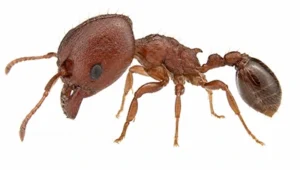
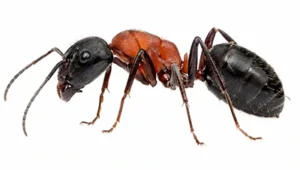
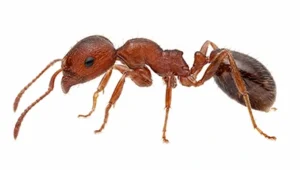
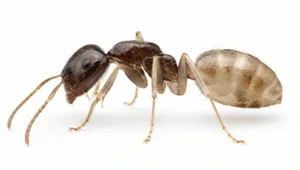
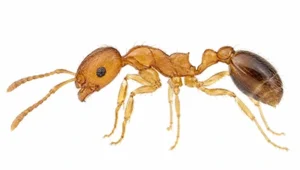
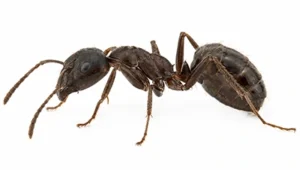
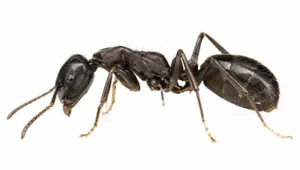
Common ant species in the Providence area. Tap any species to learn how we treat it.