Ant Control
Same-day ant control for ChampionsGate residents. Local specialists who know the unique ant pressure dynamics of golf course-adjacent lots and resort communities.
There are few better ways to spend a morning in ChampionsGate than getting out on the Greg Norman-designed course before the Florida heat settles in. The fairways are immaculate, the views are open, and the whole experience is exactly what living in a resort community is supposed to feel like.
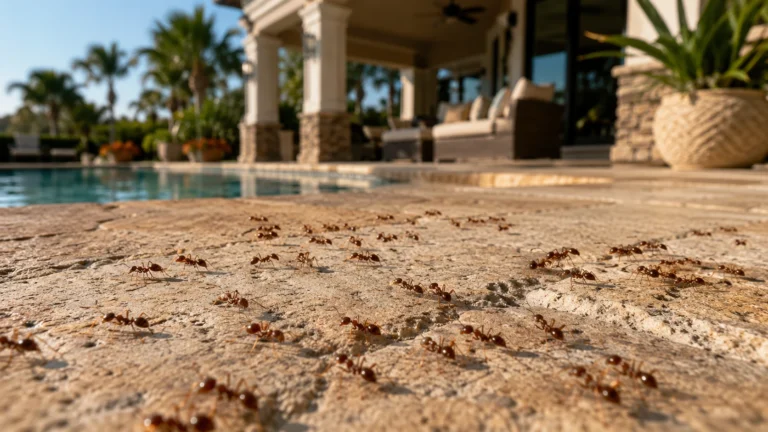
But if you’ve spent any time walking those fairways, you’ve probably noticed something that doesn’t quite fit the resort aesthetic — fire ant mounds. They appear in the rough, along the cart paths, near the sand traps, and sometimes right in the middle of a fairway. And if you’ve played enough rounds in ChampionsGate, there’s a good chance you’ve had a close encounter with one.
This guide is for ChampionsGate homeowners and residents who love the outdoor lifestyle this community offers — and want to enjoy it without fire ants becoming part of the experience.
Fire ants don’t discriminate between a manicured fairway and an untended field. What they look for is open, sunny ground with warm soil — and a championship golf course in Central Florida provides exactly that across hundreds of acres.
The Greg Norman course at ChampionsGate, along with the surrounding resort grounds, creates ideal fire ant habitat in several ways:
Irrigated turf — Golf courses require consistent irrigation to maintain playing conditions. That moisture, combined with Davenport’s naturally warm soil temperatures, creates the perfect underground environment for fire ant colony development year-round. Colonies thrive in moist soil and establish quickly in irrigated areas.
Open sunny terrain — Fire ants strongly prefer open, sun-exposed ground over shaded areas. Fairways, roughs, and the areas around tee boxes are prime territory. The manicured, low-cut turf of a golf course actually makes mound building easier — there’s less vegetation resistance and more sunlight reaching the soil surface.
Course maintenance activity — Regular mowing, aeration, and ground maintenance on the course disturbs soil periodically. Disturbed soil is a trigger for fire ant colony relocation and expansion. Colonies that get displaced from one area of the course re-establish nearby — sometimes faster than the grounds crew can address them.
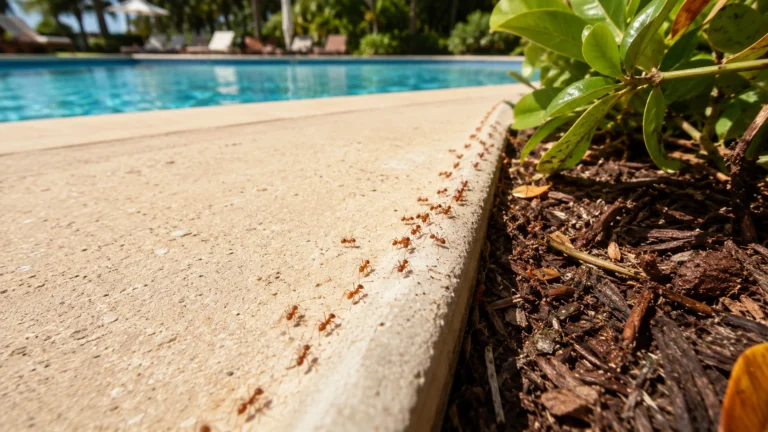
Landscaped borders — The ornamental landscaping that borders the ChampionsGate course and community common areas uses mulch heavily — and mulch against soil is one of the most favorable environments for fire ant colony establishment. Colonies in the landscaping borders forage out onto the course and into adjacent residential lots.
The professional grounds crew manages fire ant pressure across the course itself, but that management stops at the property line. What happens on your lot — and what forages from the course onto your lawn — is your responsibility.
Knowing what to look for before you step somewhere you shouldn’t keeps a round of golf from turning into an unpleasant afternoon. Here’s what ChampionsGate golfers should watch for:
Mound location patterns — Fire ant mounds on a golf course tend to cluster in specific areas: the sunny edges of the rough where it meets longer grass, around the bases of yardage markers and signs, near drainage channels, and along the edges of cart paths. These are the transition zones where soil conditions shift — exactly where fire ants prefer to build.
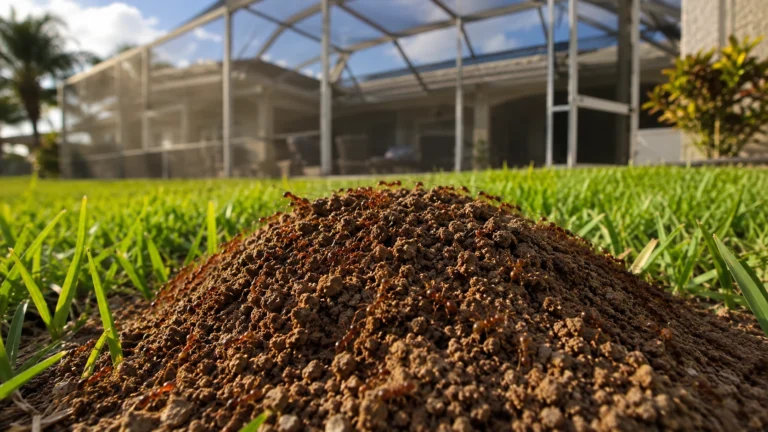
What mounds look like on a course — Golf course mounds are often lower and flatter than what you’d see in a residential lawn because regular mowing keeps the surface vegetation cut low. Don’t look for the classic dome shape you might expect — look for a disturbed, loose patch of soil that seems slightly different from the surrounding turf. It’s easy to step on one before you’ve registered what it is.
Seasonal timing — Fire ant mounds on the ChampionsGate course are most visible and most aggressive during peak fire ant season — March through May — and again during the September–October secondary spike. During these windows, mound density on the course and in surrounding residential lawns increases significantly. Play with more awareness during these months, particularly in the rough and around hazard areas.
After rain — The afternoon thunderstorms that roll through Davenport regularly during summer months are a fire ant trigger. Rainfall softens the soil and triggers new colony establishment activity. The day after a significant rain, new mounds often appear in areas that looked clear the day before. If you’re playing the morning after a storm, be especially watchful.
Given the specific dynamics of living adjacent to or near a golf course in ChampionsGate, standard reactive treatment — waiting for a mound to appear and then treating it — is the least effective approach. Here’s what actually works for ChampionsGate residents:
Pre-season perimeter treatment — Applied in late February, before the March–May peak fire ant season hits, a professional perimeter barrier treatment creates a protective zone around your home’s foundation and lawn perimeter. For course-adjacent lots especially, this treatment should extend to the fence line or property boundary where exposure from the course is highest.
Broadcast granular bait — Applied across your full lawn rather than to individual mounds, broadcast bait is carried by foraging workers back to the colony. This approach targets colonies in the early stages before mounds are visible — which is particularly important for course-adjacent properties where new satellite colonies establish regularly.
Quarterly prevention plan — Because ChampionsGate golf ants represent an ongoing, recurring pressure source rather than a one-time infestation, a single treatment is rarely sufficient for course-adjacent homes. A quarterly prevention plan maintains an active perimeter barrier through all four seasons and includes a free re-service guarantee if fire ants return between scheduled visits.
Individual mound treatment for active mounds — Any visible mound in your lawn should be treated promptly. Left alone, a mound represents a colony that is actively growing and expanding its foraging range toward your home. Our fire ant treatment service combines targeted mound treatment with the perimeter and broadcast approach for complete coverage.
ChampionsGate is part of the broader Four Corners resort corridor and also serves as one of the resort communities within our Davenport service area. Same-day service available throughout the community. Call (863) 236-9095.
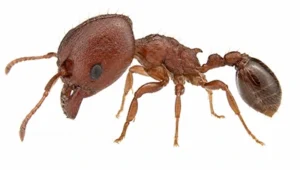
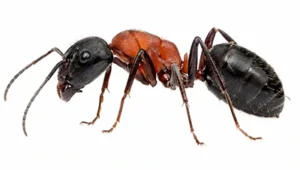
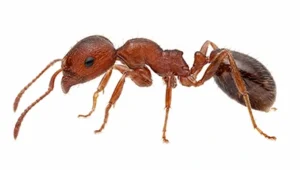
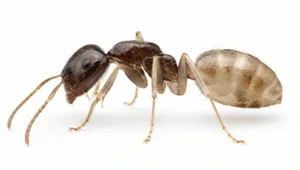
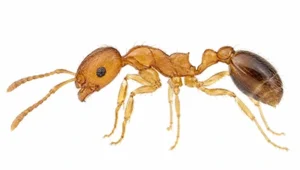
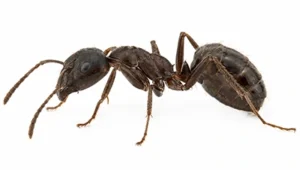
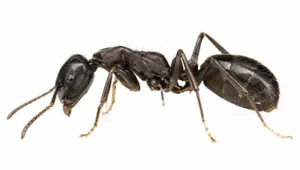
Common ant species in the ChampionsGate area. Tap any species to learn how we treat it.