
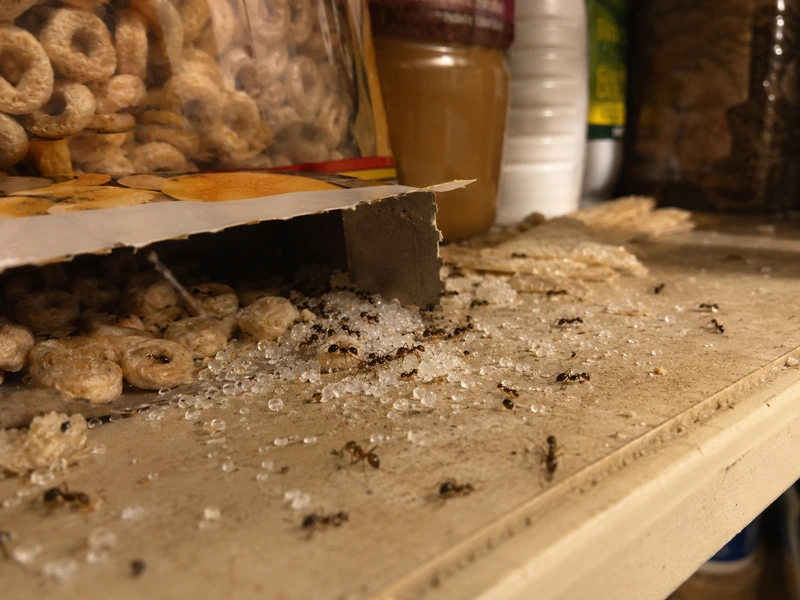
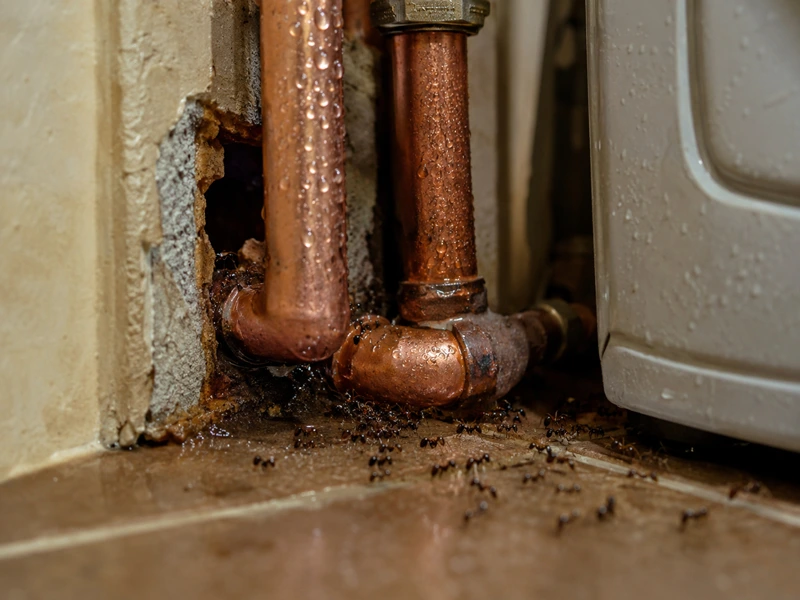
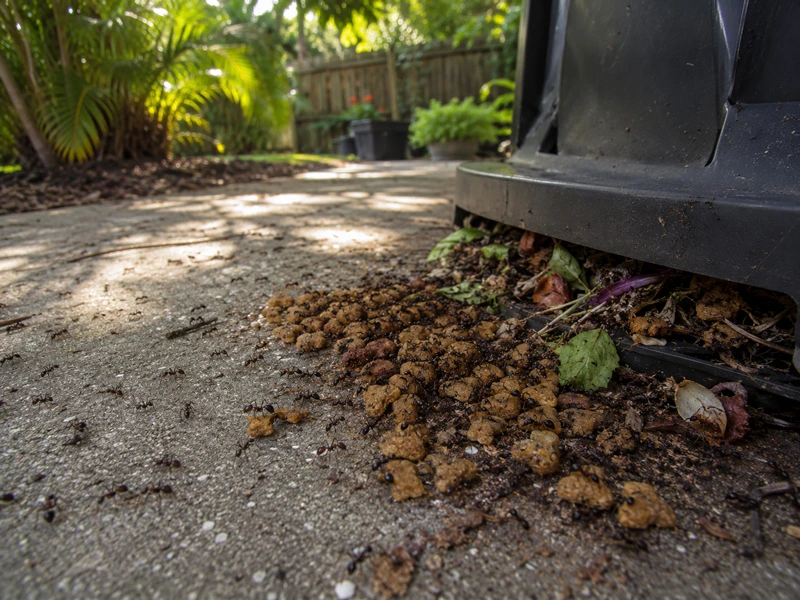



Here’s the thing about sugar ants that catches most Davenport homeowners off guard: they are not coming into your home because it’s dirty. They are coming in because your home offers something their colony needs — and in Central Florida, that something is almost always moisture.
The term “sugar ant” is used broadly in Florida to describe several small, dark foraging species. What most people in Davenport are actually dealing with falls under Tapinoma sessile — the odorous house ant — though the ghost ant (Tapinoma melanocephalum) is equally common and colloquially called a sugar ant as well. Both share the same rotten-coconut odor when crushed, both prefer sweet and moisture-rich environments, and both require the same non-repellent bait approach to actually eliminate. If you’re uncertain which species you have, our ant identification guide breaks down the key differences.
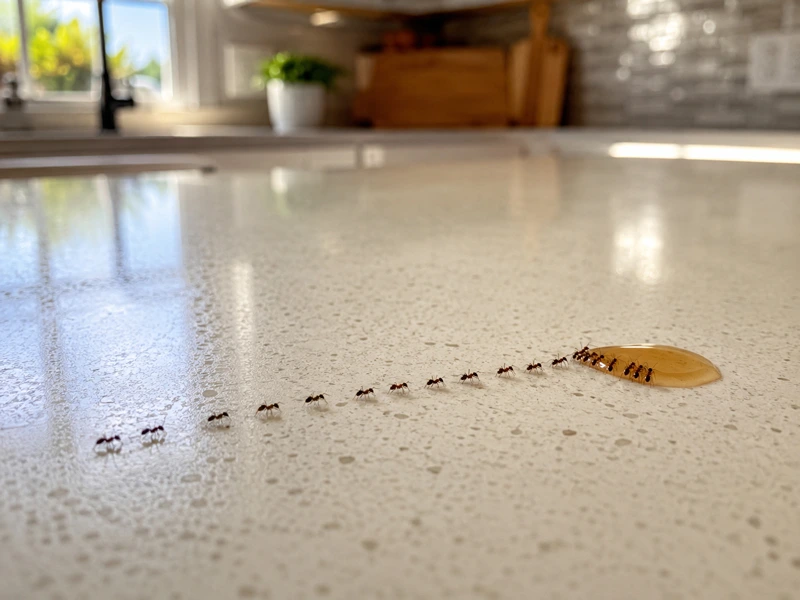
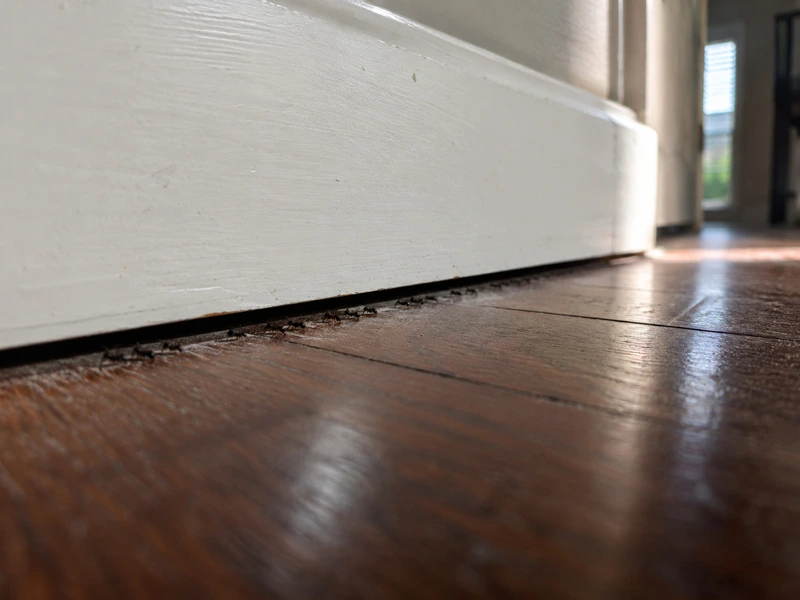
What unites every ant homeowners call a “sugar ant” is the behavior pattern: a persistent, single-file trail to a food or water source that keeps reappearing no matter how thoroughly you clean or spray. They enter through baseboards, plumbing gaps, weep holes, and expansion cracks in the slab. Once inside, foraging workers lay a pheromone trail that guides hundreds more workers to the same route. The colony itself is often never fully inside the home — it may be based in a mulch bed, under a stone, or in the soil near the foundation, with workers making the trip indoors to collect resources and return.
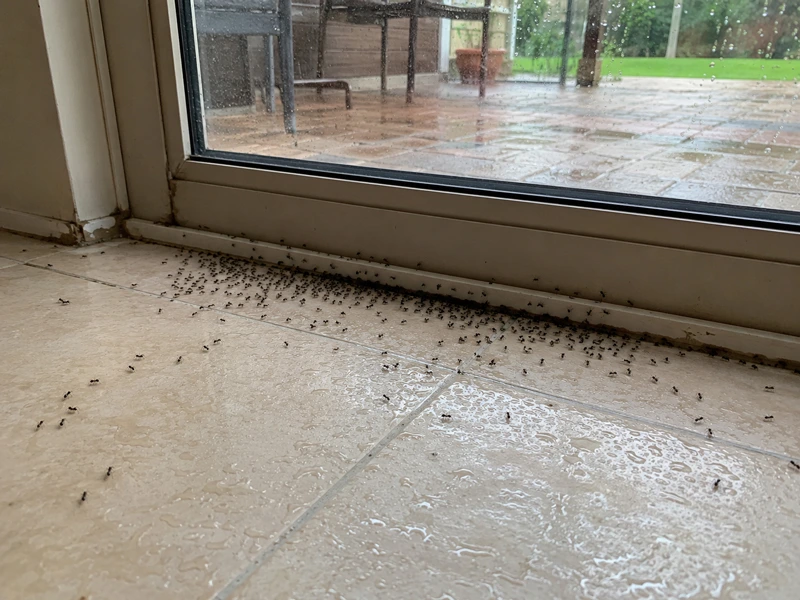
In Davenport, sugar ant pressure intensifies significantly after heavy rain. Outdoor colonies that nest in shallow soil or mulch get flooded and relocate workers and brood to the nearest warm, dry location — which is usually the interior of your home through gaps around plumbing and slab joints. You go to bed with no ants and wake up to a trail running from the garage to the kitchen. This is the signature sugar ant post-rain invasion that nearly every Davenport homeowner experiences at least once.

Ready to Take Back Your Home?
Spraying the trail — even with a product that kills every ant it touches — does not solve the problem. The pheromone trail that guides workers to your kitchen is a chemical signal laid into the surface. Killing the ants on the trail leaves the signal intact. New workers follow the same route within hours. Repellent sprays also trigger a stress response in the colony — workers scatter to secondary nesting sites and establish new trails in different areas. A trail in the kitchen becomes trails in the kitchen, the bathroom, and the laundry room.
What works is slow-acting non-repellent bait placed directly on active trails in multiple locations — enough placements that foraging workers encounter the bait before reaching the food source they were heading for. The bait is carried back to the colony and shared with workers and queens. The colony doesn’t detect it as a threat, so it doesn’t scatter. It simply declines over days to weeks as the toxicant moves through the population.
Outdoor treatment is equally important. Our perimeter treatment service addresses the mulch beds, foundation line, and soil near entry points — closing off the outdoor colony base that keeps supplying foragers into the home. For homes in Davenport that experience recurring post-rain invasions, our prevention plan maintains an active perimeter barrier through every season and includes a free re-service guarantee if ants return between visits.
If ants are appearing in multiple rooms or the problem has been going on for more than a few weeks, read our ant season guide for context on why Davenport’s year-round ant pressure makes recurring infestations predictable — and what consistent treatment actually looks like.
One call. Same-day service throughout Davenport, Haines City, Winter Haven, and the surrounding area.