Ant Season in Davenport Never Really Ends — Here’s Why
Published May 8, 2026 · Updated May 8, 2026
If you moved to Davenport from somewhere up north, you’re probably waiting for ant season to end. You’re used to a cold winter that slows everything down — insects included. By November, the ants are gone. By April, they’re back. That’s how it works everywhere you’ve lived.
That’s not how it works here.
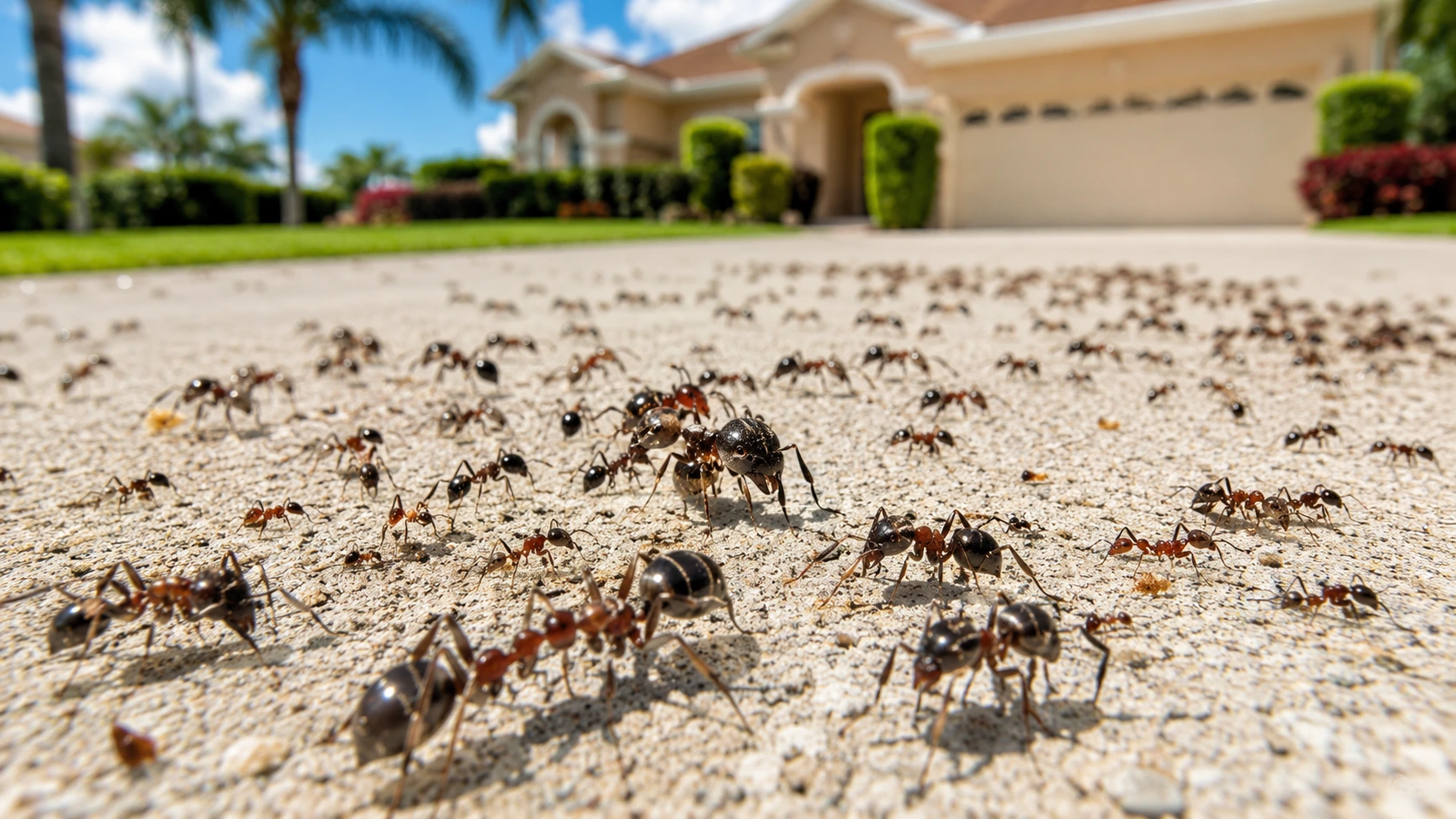
Ant season in Davenport is a year-round reality. There’s no hard freeze that resets the clock, no dormancy period that gives you a break. The ant colonies active in your yard and around your home right now will still be active in January. They’ll still be active next July. The only thing that changes is how aggressively they expand and where they show up.
If you’re a new Florida homeowner and ants have already found your home, this is the article that explains why — and what you can actually do about it.

Ready to Take Back Your Home?
Why Florida Doesn’t Have a Real Ant Season
In temperate climates, ant activity follows temperature. When the ground freezes and air temperatures drop below a certain threshold, ant colonies enter a dormant state. Queens stop laying eggs. Workers retreat deep into the soil. The colony goes quiet until spring warmth triggers activity again.
Central Florida doesn’t get cold enough for this to happen. Davenport’s average winter low temperature rarely drops below the mid-40s Fahrenheit, and those cold snaps are brief. The soil — where ant colonies live — stays significantly warmer than the air above it. Colony activity slows in the coldest weeks but never stops.
What this means practically is that the ant colonies around your Davenport home are never starting from zero. They don’t rebuild every spring. They continue from where they left off, with a population that has been growing and foraging through every month of the year. By the time spring arrives and colony expansion kicks into high gear, you’re not dealing with a young colony — you’re dealing with one that has had twelve uninterrupted months to grow.
This is one of the most important things to understand about ant control in Central Florida. The strategies that work in seasonal climates — wait it out, treat in spring, hope for a cold winter — simply don’t apply here.
How Ant Activity Changes Through the Year in Davenport
Year-round doesn’t mean unchanging. Ant behavior in Davenport does shift with the seasons, even if it never stops. Knowing what to expect each quarter helps you stay ahead of problems before they become infestations.
Winter (December – February)
This is the slowest period, but slow doesn’t mean inactive. Fire ant colonies pull deeper into the soil during cold snaps but resurface quickly when temperatures rise. Indoor species like ghost ants and pharaoh ants actually become more visible during cooler months as they move toward the warmth inside your home. If you’re seeing more ants inside your Davenport home in winter, this is why.
Spring (March – May)
Peak ant season in Davenport. Warming temperatures trigger rapid colony expansion across every species. Fire ant mounds appear overnight. Ghost ant trails multiply. Carpenter ant swarmers emerge from mature colonies looking to establish new nesting sites. This is the highest-urgency window of the year and the most important time to have a perimeter treatment in place before the surge begins. Read more about what to expect during fire ant season specifically.
Summer (June – August)
Sustained heat drives two things simultaneously: outdoor colonies push deeper into cooler soil, and indoor foraging increases as ants seek moisture and cooler interior environments. Kitchen ants, bathroom ants, and bedroom ants peak during summer months as colonies look for water sources inside air-conditioned homes. This is when homeowners most commonly discover they have an indoor ant problem that started outside.
Fall (September – October)
A secondary spike in activity as temperatures moderate and colonies that retreated during peak summer heat become aggressive again. Fire ant mounds re-emerge. New colony establishment activity picks up. This is the second-most important treatment window of the year.
The Ant Species That Never Really Slow Down
Not all ants are equally active year-round, but several of the most common species in Davenport keep colonies at nearly full activity regardless of season:
Ghost ants are among the most cold-tolerant indoor species in Central Florida. Their colony structure — multiple queens, multiple satellite nests — means they’re almost impossible to naturally suppress through temperature alone. If you have ghost ants in your home, they are active 365 days a year.
Pharaoh ants are another year-round indoor species. They thrive in the temperature-controlled environment of your home and are completely unaffected by outdoor seasonal changes. They also reproduce rapidly and establish new satellite colonies aggressively, which is why a small pharaoh ant problem can become a major infestation within a single season if left untreated.
White-footed ants maintain massive colonies — sometimes numbering in the millions — that are active year-round in Central Florida. Their sheer population size means that even partial suppression from cooler temperatures is offset by the colony’s numbers.
Fire ants slow down in cold snaps but rebound immediately. In a typical Davenport winter, there may be a few days where mound activity is reduced. But a week of warmer weather erases that reduction entirely.
Why Waiting Doesn’t Work in Davenport
This is the most common mistake we see from homeowners who are new to Florida. They see ants in October and think, “I’ll wait for winter — that’ll sort it out.” By January, the ants are still there. By March, there are more of them.
Every month you wait is a month the colony spends growing, establishing satellite nests, and extending its foraging range. A colony that could have been eliminated with a targeted treatment in October becomes a significantly harder problem to solve by spring.
There’s also a cost dimension to this. Treating an early-stage infestation is straightforward and typically involves a single perimeter application with targeted interior baiting where needed. A well-established, multi-satellite colony — the kind that develops when a problem goes untreated through a full year-round cycle — requires more extensive treatment, more follow-up visits, and sometimes structural repairs if carpenter ants are involved.
The waiting strategy works in Ohio. It doesn’t work in Davenport.
Ready to Take Back Your Home?
What Year-Round Ant Pressure Means for Your Home
Ant season being year-round has a practical implication that catches most new Florida homeowners off guard: a single treatment is rarely enough to provide lasting protection.
In seasonal climates, a spring treatment can carry a home through the summer and into fall before colony activity naturally slows again. In Davenport, there’s no natural slowdown to extend the protection window. A one-time perimeter treatment applied in spring will start to wear off before the fall activity spike arrives. If it wears off before that, you’re unprotected during one of the two highest-risk periods of the year.
This is why pest control professionals in Central Florida recommend quarterly service for ant control — not because they want more visits, but because the 90-day retreatment cycle aligns with how long effective perimeter barriers typically last in Florida’s climate and ant pressure conditions.
A quarterly prevention plan does three things a one-time treatment can’t:
- It maintains an active perimeter barrier through all four seasons and both activity spikes
- It includes interior spot checks to catch any indoor activity before it becomes a full infestation
- It comes with a re-service guarantee — if ants appear between scheduled visits, we come back at no charge
For new Davenport homeowners especially, getting onto a prevention plan before the first problem appears is significantly easier and cheaper than treating an established infestation after the fact.
How to Tell If Your Ant Problem Is Seasonal or Year-Round
If you’ve been in your Davenport home for at least a year, you may have noticed a pattern to your ant activity. Here’s a quick way to assess what you’re actually dealing with:
- Ants only visible outdoors in spring and fall — You likely have fire ants or carpenter ants responding to seasonal temperature changes. A targeted perimeter treatment timed to the two activity peaks may be sufficient.
- Ants visible indoors at any point during winter — You almost certainly have ghost ants, pharaoh ants, or another indoor-adapted species that is active year-round. One-time treatment won’t solve this.
- Ants appearing in a new room — Expansion to a new area of the home — from the kitchen to the bathroom, or from the bathroom to the bedroom — is a sign of a growing infestation. Read our articles on kitchen ants, bathroom ants, and bedroom ants to understand what’s driving the spread.
- Ants returning within weeks of a store-bought treatment — The colony was not eliminated. This is the most common sign that what you have requires professional species identification and targeted treatment, not another can of spray.
Getting Ahead of Ant Season in Davenport
The homeowners who have the least trouble with ants in Davenport are the ones who don’t wait for a problem to appear before they act. A pre-season perimeter treatment applied in late February — before the March–May surge — combined with quarterly maintenance service through the year is the closest thing to an ant-free home that Central Florida’s year-round pressure allows.
If you’re already seeing ants, the best time to call was a month ago. The second best time is now.
We serve Davenport and the surrounding areas including Haines City, Winter Haven, ChampionsGate, and Polk City. Same-day service is available. One call gets a technician out to assess your specific situation and put together a treatment plan that accounts for Davenport’s year-round ant pressure — not a seasonal approach designed for somewhere else.