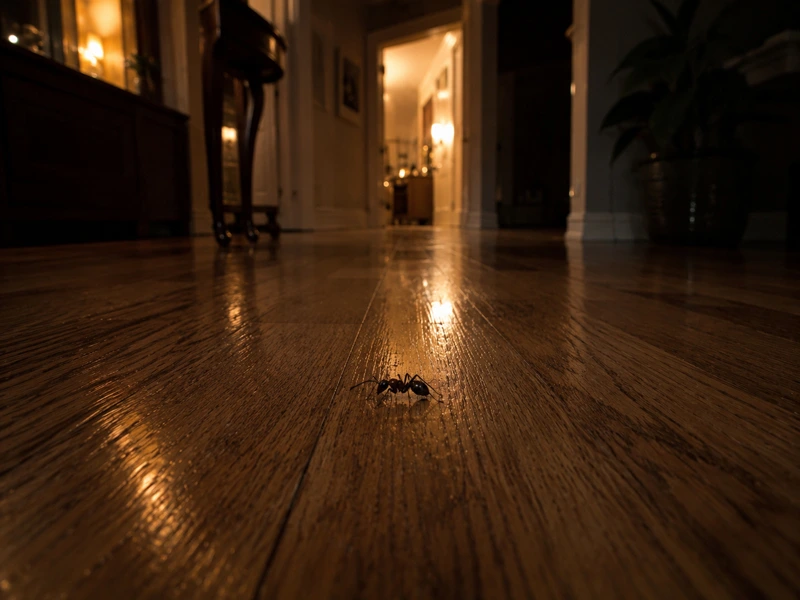
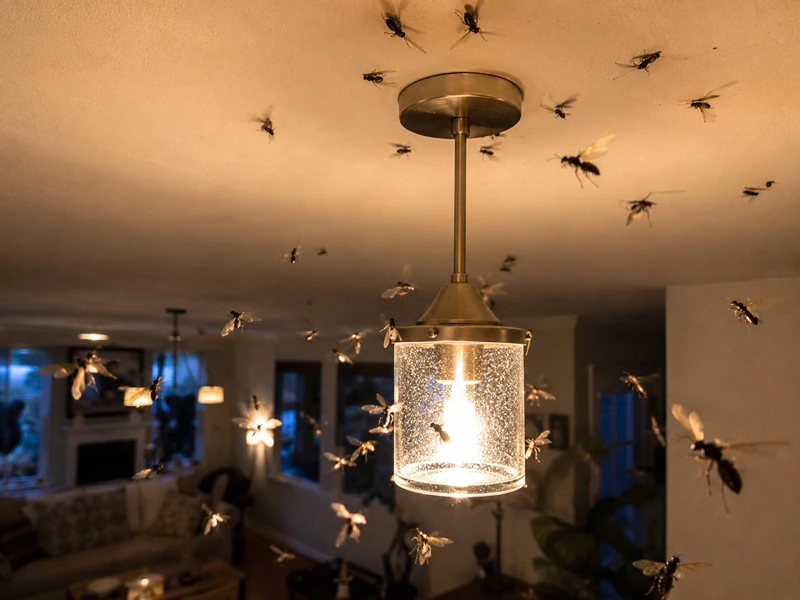
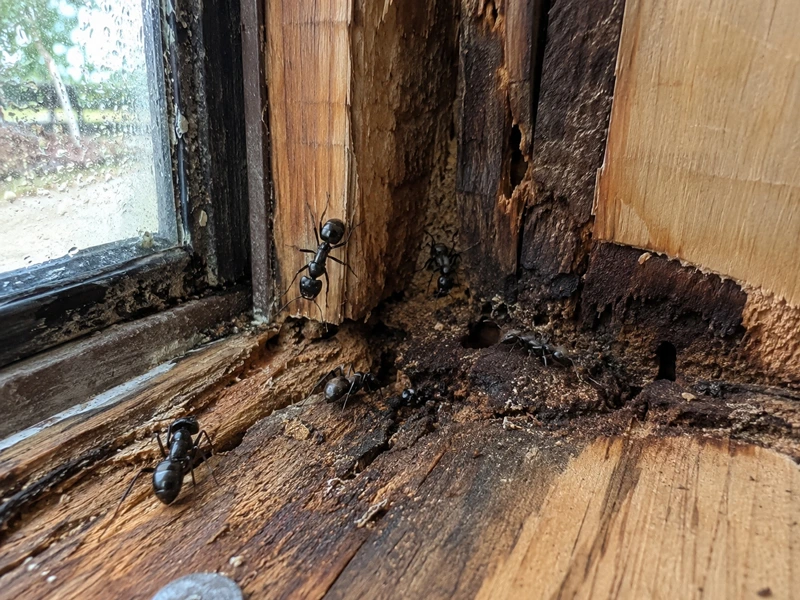



If you’re seeing large black ants in your Davenport home — particularly at night, near a window frame, a door threshold, or a baseboard in the bathroom — they are almost certainly not there by accident. Carpenter ants don’t wander. They follow established trails between an outdoor parent nest and an indoor satellite colony, and those trails exist because the colony has already found something worth coming back to.
The Florida carpenter ant (Camponotus floridanus) is the largest ant species you’re likely to encounter indoors in Davenport. Workers range from 1/4 to nearly 1/2 inch long, bicolored — black body with a reddish-orange mid-section — and covered in fine golden hairs that catch the light. They’re hard to miss when you see one. The problem is that by the time you’re seeing them regularly, the satellite colony inside your home is usually already well established.
What carpenter ants are doing inside your walls is not eating wood. That’s a common misconception. They’re excavating it — tunneling through soft, moisture-damaged wood to create smooth-walled galleries where the colony nests and raises its young. The distinction matters because it means wherever you find carpenter ants, there’s almost always moisture damage already present. A leaking window seal, a slow drip behind the shower wall, condensation around an AC penetration — carpenter ants find these soft spots before you do. Their presence is frequently the first visible sign of a hidden moisture problem that, left unaddressed, will cost far more to repair than the ant treatment ever would.
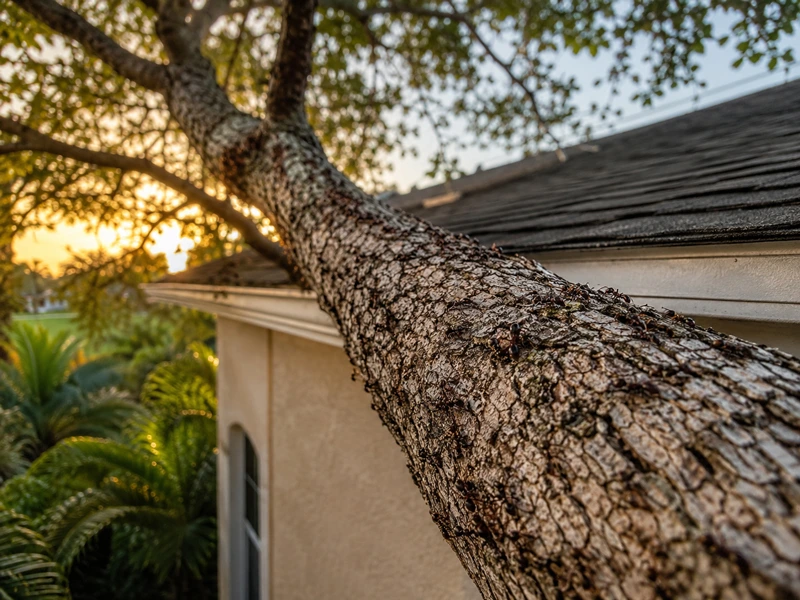
In Davenport, the primary entry pathway is almost always an overhanging tree limb or palm frond touching the roofline — a direct bridge from an outdoor parent nest into the attic or soffit. Mulch placed against the foundation is the second most common pathway, particularly in newer Davenport subdivisions where landscaping is installed right up against the exterior wall. University of Florida IFAS research confirms Camponotus floridanus as one of the most reported structural pest ants in the state, accounting for a significant portion of homeowner ant complaints across the Orlando and Tampa metro regions — both of which border Davenport’s Polk County.

Ready to Take Back Your Home?
DIY treatments fail for carpenter ants for a specific reason: the parent queen is almost never inside your home. She lives in an outdoor stump, a dead tree, or a palm boot somewhere on your property or a neighbor’s. Sprays inside the home kill the foraging workers you can see but leave the parent colony intact — new workers stream back into the satellite nest within days. Killing the indoor colony without addressing the outdoor parent nest is like cutting one branch off a tree and expecting it not to grow back.
Effective carpenter ant treatment requires finding and treating both the satellite colony inside and the parent colony outside. That means a combination of interior void injection where the satellite nest is established, exterior perimeter treatment, and — critically — identifying and removing the bridge that connects the parent nest to your home. Trimming overhanging limbs, pulling mulch back six inches from the foundation, and sealing exterior cracks and utility penetrations are part of any complete carpenter ant treatment. Our perimeter treatment service addresses the exterior entry points, and our indoor ant control service handles the interior satellite colony directly.
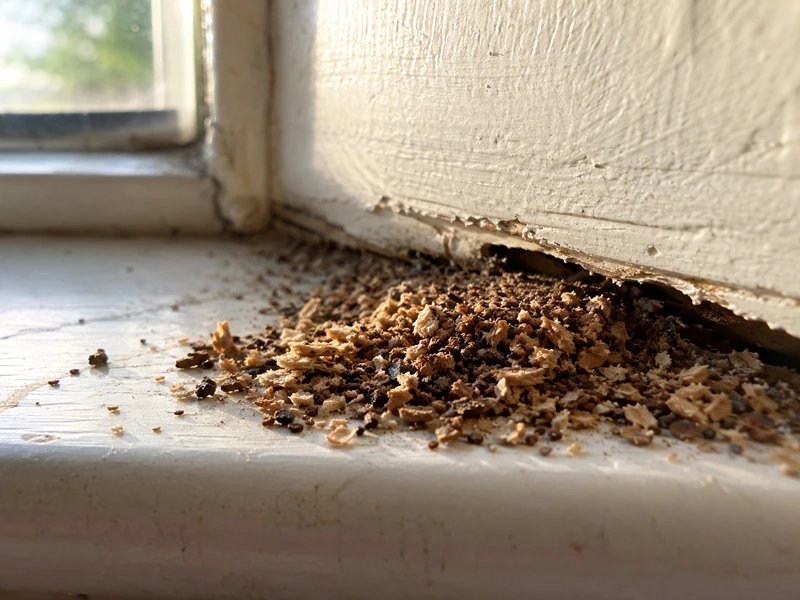
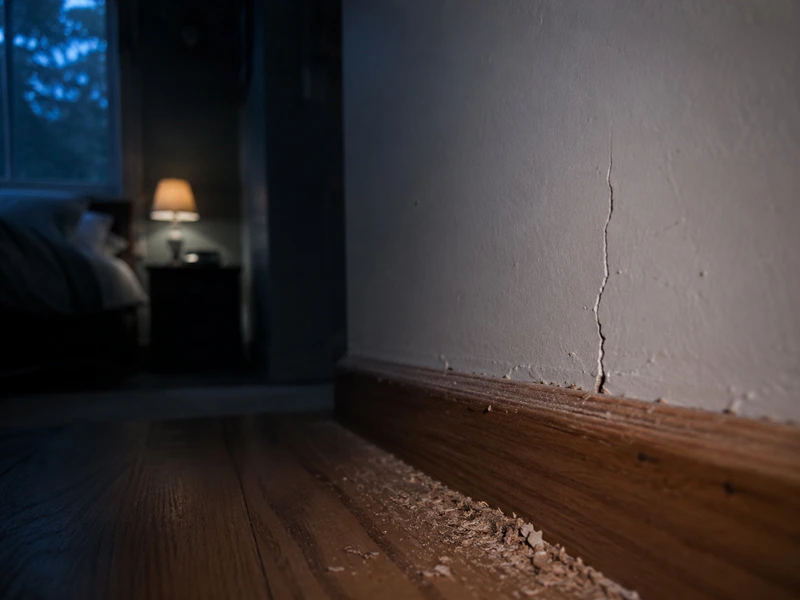
If you’ve found what looks like coarse sawdust near a baseboard or window sill, read our carpenter ants damage guide before doing anything else — it walks through exactly what frass looks like, how to distinguish it from termite damage, and how urgently you need to act based on what you find. And if you’re not certain what species you have, our ant identification guide covers Florida’s most common large ant species side by side.
Same-day service available throughout Davenport and surrounding communities. One call — we find it, treat it, and stop it from coming back.