
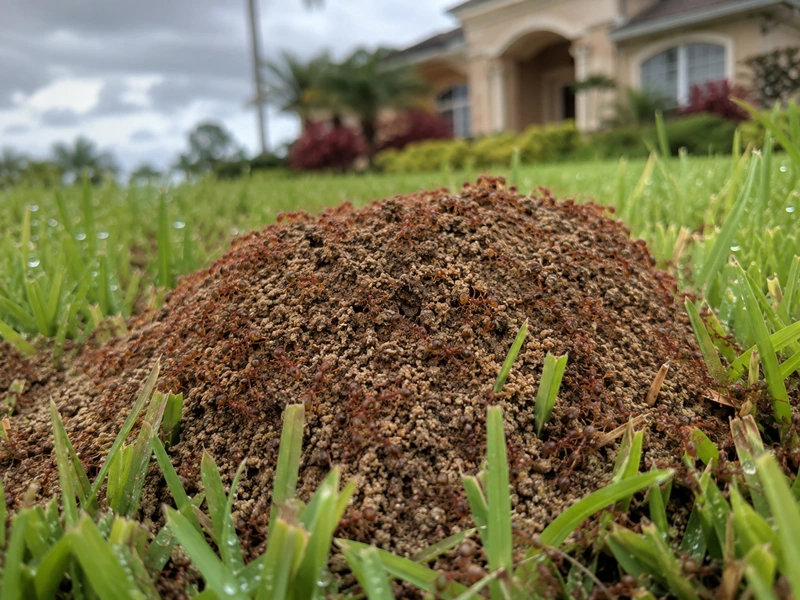

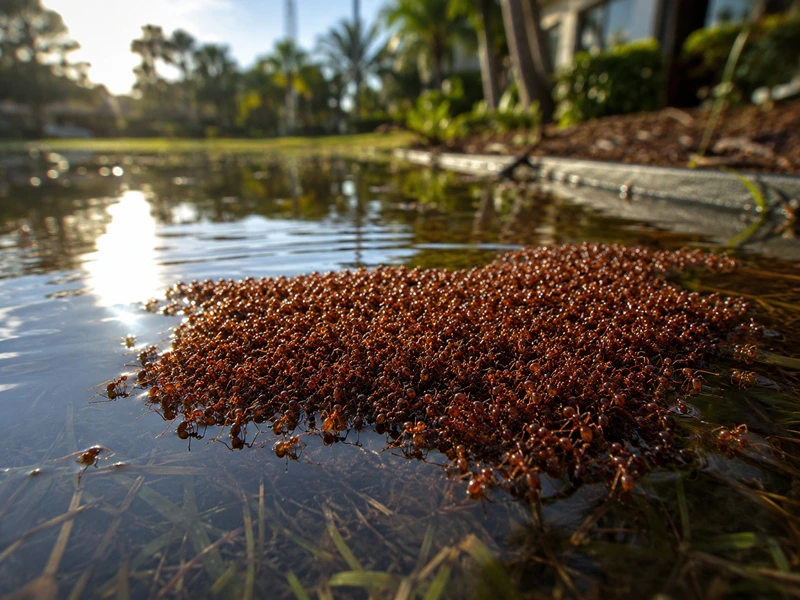



You already know what a fire ant mound looks like. What you may not know is why it appeared in your yard seemingly overnight — and why the one you treated last month is already back.
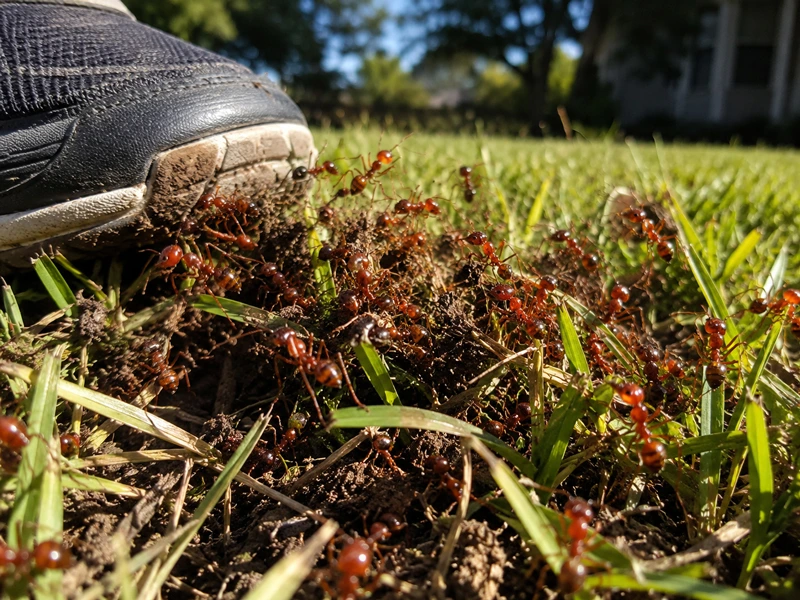
Fire ants are one of the most aggressive and recognizable ant species in Florida. The red imported fire ant (Solenopsis invicta) builds large, dome-shaped mounds in open sunny areas — lawns, driveways, sidewalk edges, and the bases of trees. A disturbed mound triggers an immediate, coordinated attack. Each worker can sting repeatedly, injecting a venom called solenopsin that causes the characteristic burning sensation and the white pustule that forms within 24 hours. For most people that’s painful and irritating. For children, pets, and anyone with a venom allergy, it can be a medical emergency.
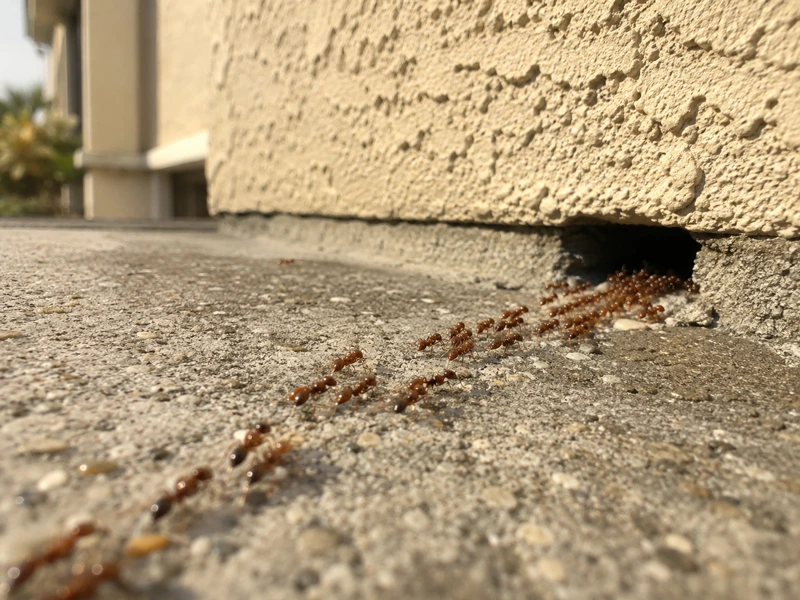
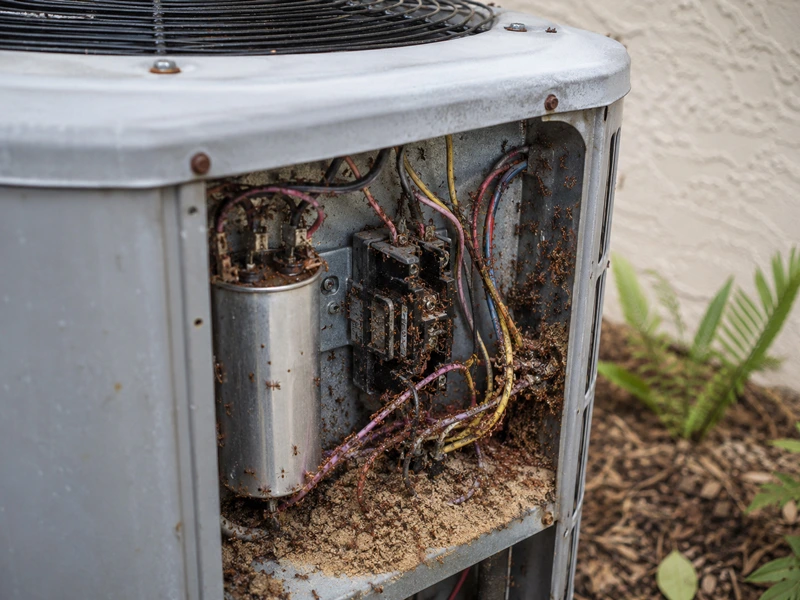
In Davenport, fire ant mounds appear most visibly after rain, when the colony moves upward to avoid flooding. But the colony itself never really goes away — it simply moves deeper or surfaces elsewhere. A single large colony can contain 200,000 to 500,000 workers, and Davenport’s mild winters mean colonies never enter true dormancy. The warm, sandy soils of Polk County’s Central Florida ridge, combined with heavy summer rainfall and the constant soil disturbance that comes with new subdivision development, make this one of the highest fire-ant-pressure environments in the state.

Ready to Take Back Your Home?
Standard yard sprays kill the surface workers you can see and leave the queen and brood untouched — the colony rebuilds within days. Broadcast bait products from hardware stores are often applied at the wrong rate, at the wrong temperature, or allowed to degrade before workers pick it up. And treating one mound does nothing about the mating flights landing in your yard from neighboring properties — up to 97,000 new queens per acre per year can land in a treated yard and start new colonies within weeks. That’s why fire ant problems in Davenport feel like a treadmill — you treat, it comes back, you treat again.
Effective fire ant control requires reaching the queen. That means combining a targeted mound drench with a broadcast granular bait applied across the full lawn — not just the visible mound — timed to when workers are actively foraging and temperatures are right for bait uptake. For homes adjacent to golf courses, conservation areas, or retention ponds (which applies to a large portion of Davenport’s subdivisions), the source pressure doesn’t stop at your property line, which is why our prevention plan maintains an active barrier through both the spring and fall activity spikes rather than treating reactively.
If you want to understand what makes fire ants so dangerous specifically — including what to watch for in children and pets after a sting — read our fire ant stings guide. And if you’re not certain whether what you have in your yard is actually fire ants, our ant identification guide covers the differences between fire ants, big-headed ants, and other mound-building species in Davenport.
One call gets a technician to your property the same day. We identify the extent of the infestation, apply the right combination of treatments for your lot’s specific exposure, and back it with a satisfaction guarantee. Don’t wait for a sting incident to act.