
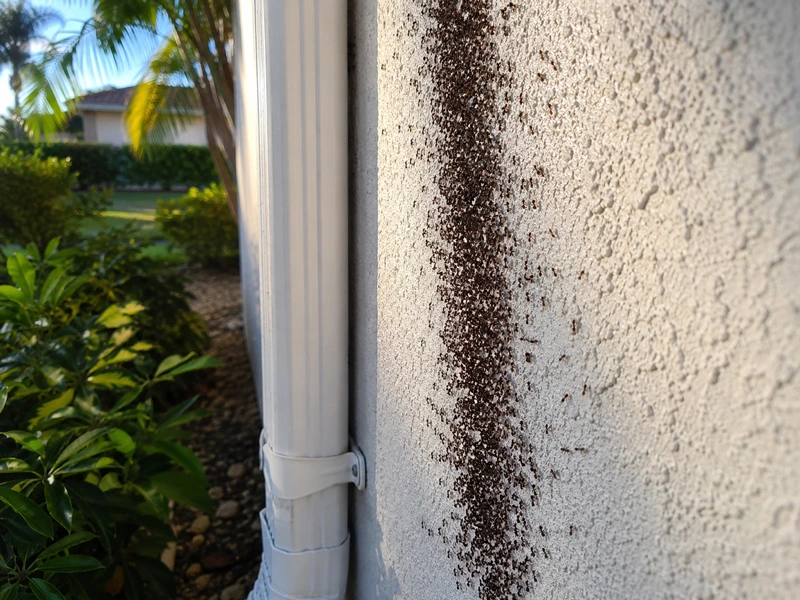
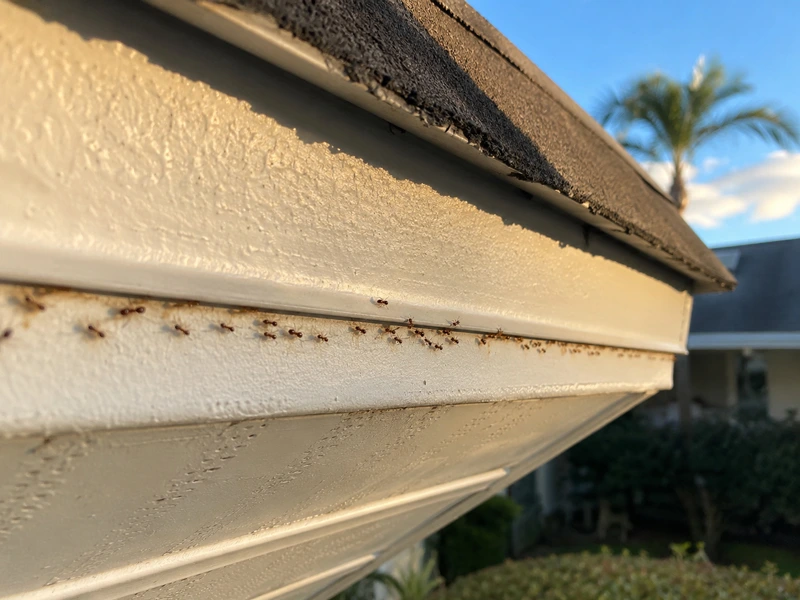
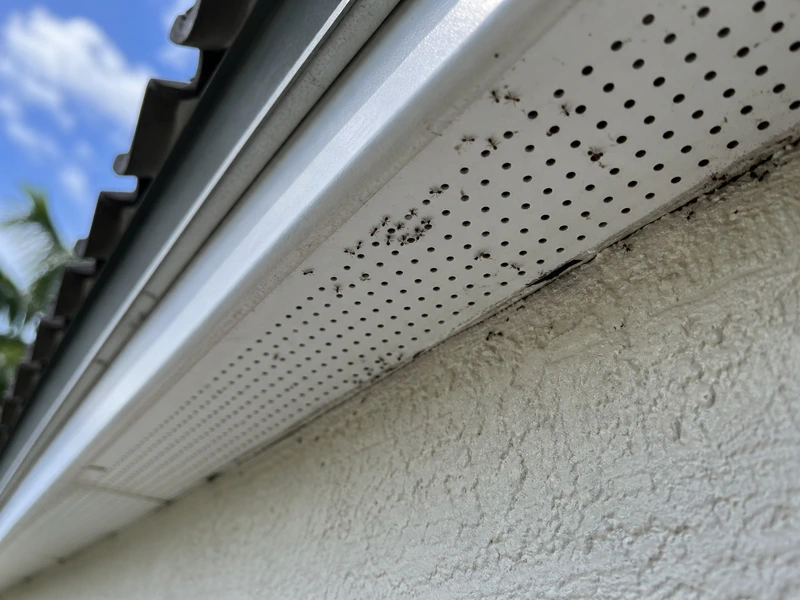
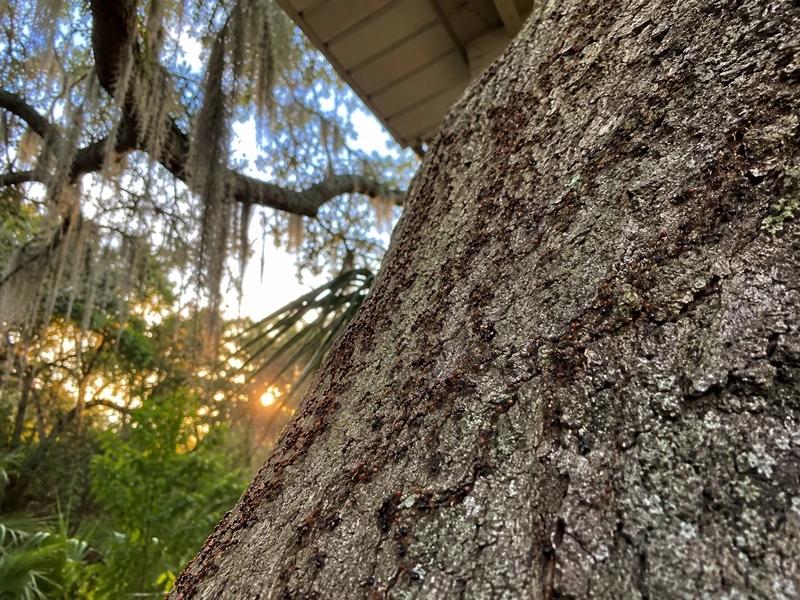
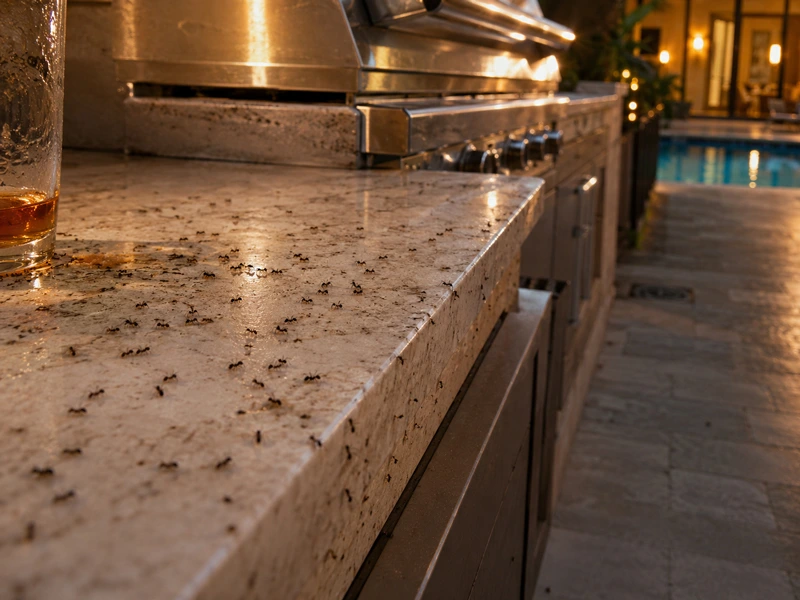
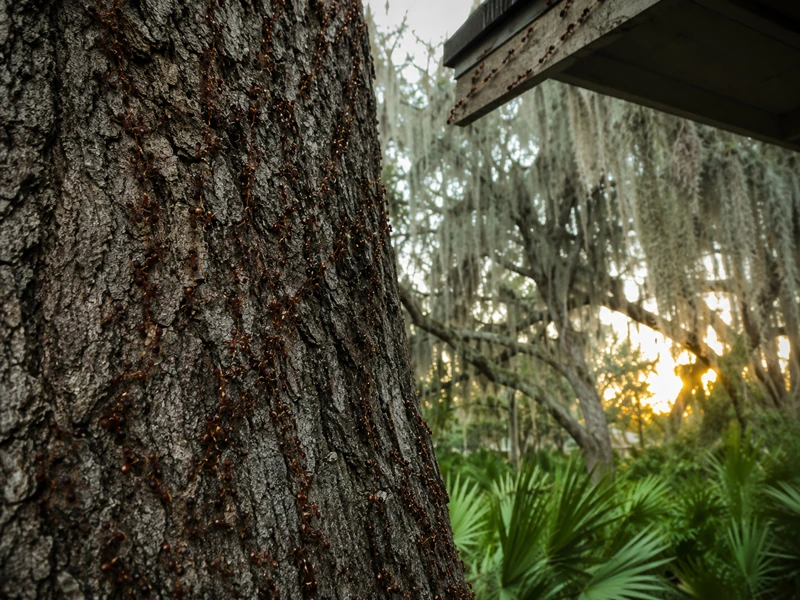



Most ant problems in Davenport involve a trail, a mound, or a kitchen counter infestation. White-footed ants are something else entirely — and if you’ve ever stood at your back door watching a column of small black ants stream steadily up your exterior wall and disappear into the soffit, you already know that this is a different scale of problem.
White-footed ants (Technomyrmex difficilis) — named for their distinctly pale feet and leg tips — form some of the largest ant colonies of any species in Central Florida. Established infestations routinely contain hundreds of thousands to several million individuals spread across dozens of connected sub-nests in trees, soffits, wall voids, and landscaping. The colony you see on your exterior wall is a fraction of what exists across your property. What makes this species particularly difficult to control isn’t just the colony size — it’s the biology. Approximately half of every white-footed ant colony consists of reproductive females that never leave the nest. They lay what are called trophic eggs — non-viable eggs fed to larvae and non-foraging colony members as food. Those reproductive females are never exposed to surface sprays, and because adult workers do not share food mouth-to-mouth the way most ant species do, a poison carried by a forager rarely reaches the reproductive core of the colony.
White-footed ants first appeared in Florida in the late 1980s, detected at nurseries in south Florida before spreading northward into Central Florida through infested plant shipments. Today, University of Florida IFAS research confirms populations across Polk County and most surrounding counties in the region. Davenport’s combination of heavy palm and ornamental landscaping, year-round honeydew-producing pests, and abundant attic and soffit voids in stucco construction makes it ideal white-footed ant habitat. The most common introduction pathway into any new Davenport home is infested nursery stock — the root ball of an ornamental plant or palm purchased from a south Florida nursery and installed in the landscape.

Ready to Take Back Your Home?
The honeydew connection is important to understand. White-footed ants don’t just forage on your plants — they actively protect aphids, scale insects, mealybugs, and whiteflies from their natural predators, allowing these pest populations to explode. The sticky honeydew produced by these insects is a primary food source for the ants. If you have ornamental plants showing sooty mold, yellowing leaves, or sticky residue, white-footed ants are very likely involved. Addressing the plant pest population reduces ant food sources and is part of any complete treatment plan.
Standard over-the-counter sprays fail against white-footed ants for the same structural reason they fail against most Florida ant species — they kill foragers but never reach the reproductive core. But white-footed ants have the additional challenge that adult workers don’t share ingested food, so even slow-acting bait doesn’t move through the colony the same way it does for other species. Effective treatment requires sweet liquid baits — replenished frequently because they dry out — placed at numerous locations along every active foraging trail simultaneously. Vegetation must be trimmed back from the structure to eliminate tree and palm bridges onto the roof, and honeydew-producing plant pests must be controlled as part of the same program. Our perimeter treatment service addresses the exterior entry points and trail routes, and our prevention plan maintains consistent coverage through all four seasons — which is the only approach that keeps white-footed ant pressure manageable when the colony size makes full elimination unrealistic.
For context on how white-footed ants compare to other black ant species in Davenport — particularly big-headed ants and carpenter ants, which are sometimes confused with them — our ant identification guide covers the visual and behavioral differences clearly. And if you’re seeing ants indoors as well as outdoors, our indoor ant control service addresses the attic and interior void activity alongside the exterior treatment.
Same-day service available. Serving Davenport, ChampionsGate, Reunion Resort, and the surrounding area.