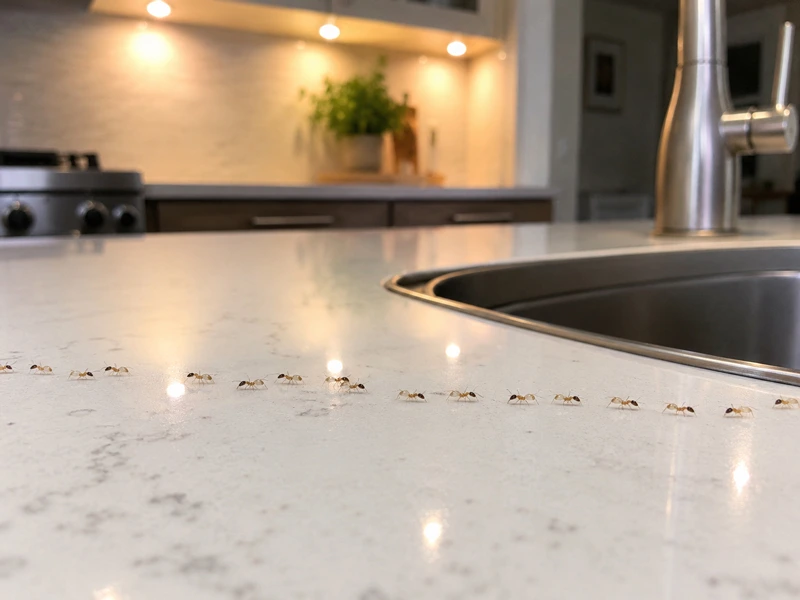
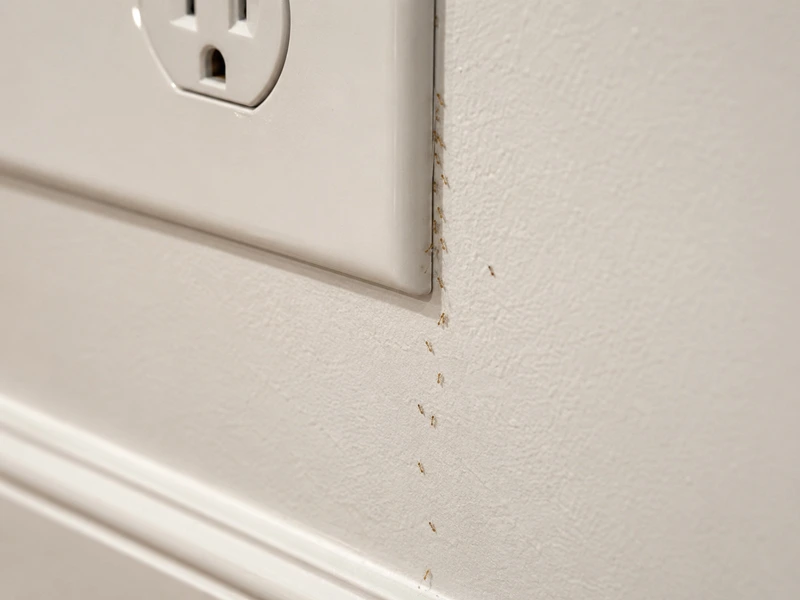



You’ve wiped down the counter. You’ve put everything in sealed containers. You’ve sprayed the trail twice this week. And every morning, they’re back — that faint, barely visible line of pale ants moving across the kitchen counter like yesterday’s treatment never happened.
That’s a ghost ant infestation. And the reason it keeps coming back isn’t that your home is dirty, or that you’re using the wrong product. It’s that the product you’re using is sending exactly the wrong signal to the colony.
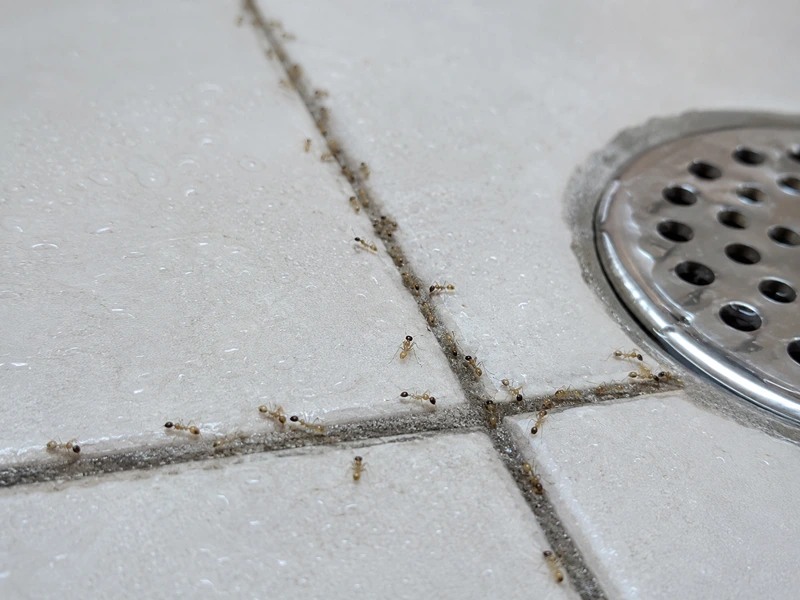
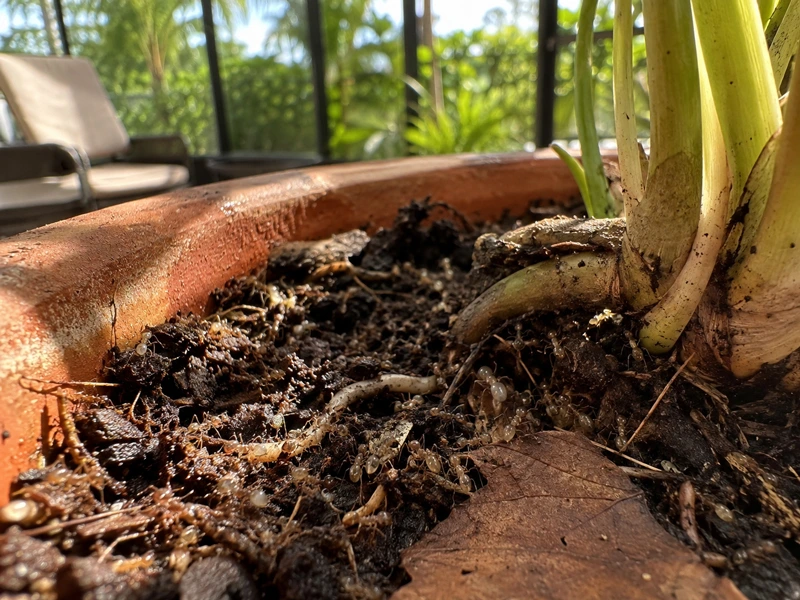
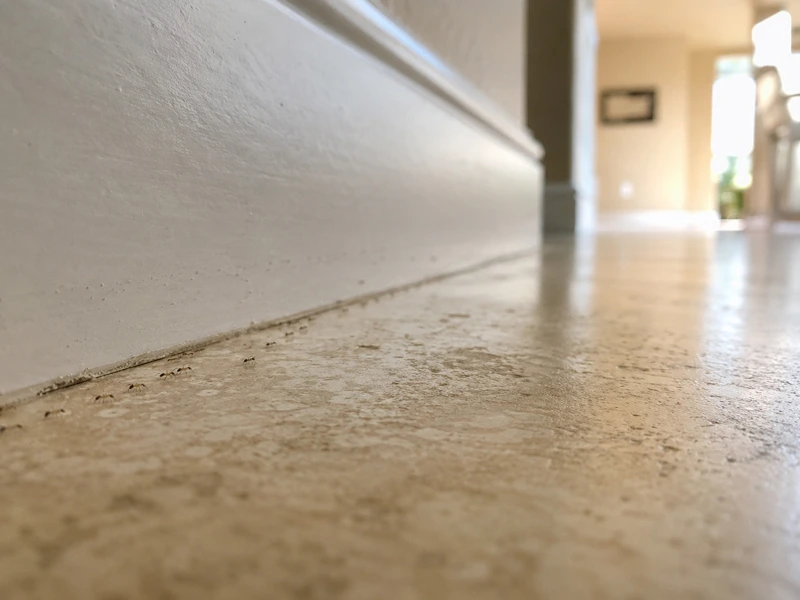
Ghost ants (Tapinoma melanocephalum) are the most common indoor ant species in Central Florida — and the most commonly mistreated. Workers are tiny, roughly 1/16 of an inch, with a dark head and a nearly translucent pale body that makes them nearly invisible on light-colored surfaces. They trail along counter edges, grout lines, and baseboard seams, and they nest in wall voids, inside potted plants, and behind tile — not in one place, but in many small satellite nests spread throughout the home simultaneously.
In Davenport, ghost ants are particularly prevalent in newer construction. When a subdivision is developed, existing ant colonies are displaced from the soil. Ghost ant colonies — which have multiple queens and multiple nesting sites — relocate and re-establish faster than almost any other species. New homes in communities like ChampionsGate, Sereno, and Stoneybrook South often have ghost ant pressure before the homeowner has fully unpacked. The combination of residual moisture in new concrete and drywall, Florida’s ambient humidity, and gaps around fresh plumbing penetrations gives ghost ants everything they need to establish deep inside the home’s structure.

Ready to Take Back Your Home?
Here’s what makes ghost ants so difficult to treat without professional help: repellent sprays — the standard over-the-counter aerosols — cause the colony to bud. When ghost ants encounter a chemical repellent, surviving queens take workers and brood and split off into new satellite nests in areas the spray hasn’t reached. You treat the kitchen counter. The trail disappears for two days. Then a new trail appears in the bathroom. You treat that. A week later they’re in the bedroom. The spray isn’t solving the problem — it’s relocating and multiplying it.
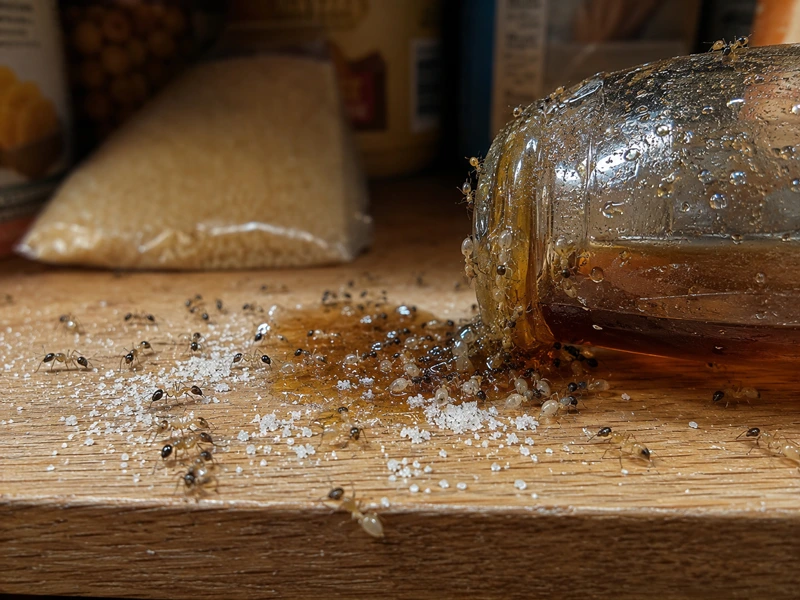
The treatment that actually works is slow-acting gel bait placed in small amounts along established trails — not a spray, not a granule, and not a single large bait placement. Foraging workers pick up the bait and carry it back to the colony, where it’s eventually shared with the queens. The colony doesn’t detect it as a threat, so it doesn’t bud. It simply stops. Most Davenport homeowners see significant trail reduction within 3 to 7 days of a professional bait treatment, with full colony elimination following within 2 to 4 weeks.
For a deeper look at why ghost ants are so common in Davenport kitchens specifically — and what the professional treatment process looks like step by step — read our ghost ants in the kitchen guide. If you’re not certain whether what you’re seeing is a ghost ant or another small pale species like the pharaoh ant, our ant identification guide covers the differences clearly. And for ongoing protection that prevents ghost ant pressure from re-establishing between treatments, our prevention plan maintains active perimeter coverage through every season.
Don’t keep spraying. One call gets a technician to your Davenport home to identify the species, locate the trail origins, and apply the right treatment the first time.