
Kitchen Ants in Davenport? Here’s What’s Attracting Them
Published May 8, 2026 · Updated May 8, 2026
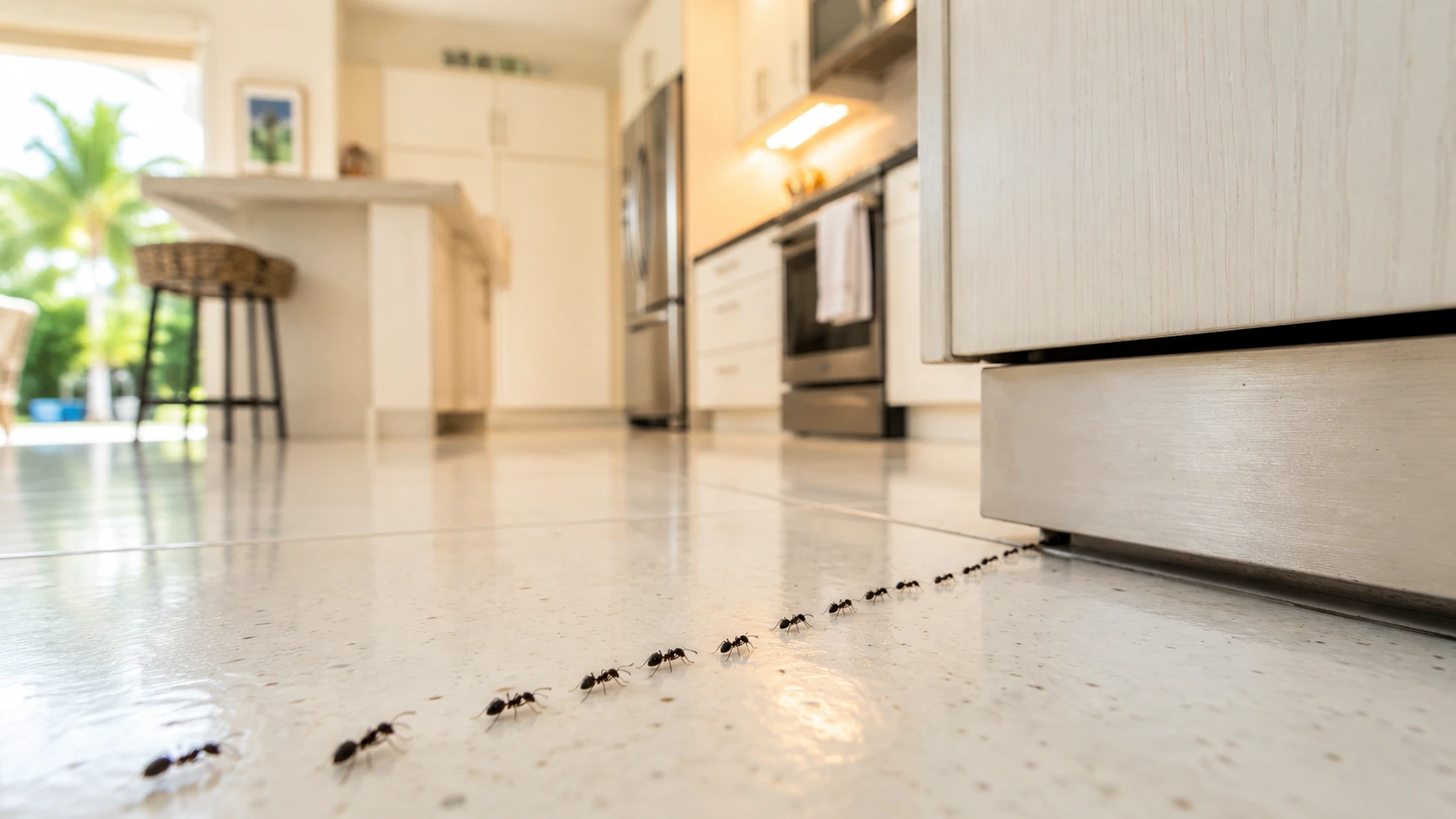
You keep a clean kitchen. You wipe the counters, you don’t leave food out, you take the trash out regularly. And yet there they are — a trail of ants moving across your counter like they own the place.
If this sounds familiar, you’re not alone. Kitchen ants are one of the most common complaints we hear from Davenport homeowners, and the frustrating truth is that cleanliness has very little to do with it. Florida ants don’t need a dirty kitchen. They need moisture, warmth, and a way in — and most Davenport homes give them all three.
Here’s what’s actually drawing kitchen ants into your home and what it takes to get rid of them for good.

Ready to Take Back Your Home?
Why Kitchen Ants in Davenport Aren’t About Cleanliness
This is the first thing most people get wrong. They scrub the counters, seal the snacks, and deep clean the pantry — and the ants keep coming. That’s because the ants aren’t primarily after food. They’re after moisture.
Central Florida’s humidity creates the perfect conditions for ant colonies to thrive both inside and outside the home. Your kitchen is one of the most moisture-rich rooms in the house. Pipes under the sink, condensation around the refrigerator, a slow drip behind the dishwasher, steam from cooking — all of it makes your kitchen attractive to ants regardless of how spotless the surfaces are.
The second factor is access. Most Davenport homes — especially newer builds — have tiny gaps around plumbing penetrations, cabinet baseboards, and utility lines that ants can move through easily. Once a scout ant finds a route into your kitchen and signals the colony, you’ll have a trail within hours.
The 5 Real Reasons Kitchen Ants Keep Showing Up
Understanding why ants are in your kitchen is the first step to stopping them. Here are the five most common reasons Davenport homeowners deal with persistent kitchen ant problems:
1. Moisture sources near entry points
A slow leak under the sink, condensation behind the fridge, or a dripping faucet creates the kind of moisture environment that ants actively seek out. They don’t need standing water — even consistent humidity in a cabinet is enough.
2. Gaps around plumbing and utilities
The space where pipes enter your kitchen — under the sink, behind the dishwasher, along the baseboard — is rarely perfectly sealed. These small gaps are ant highways. A trail can move from the soil outside to your kitchen counter without ever being fully exposed.
3. Pet food and water bowls
Pet food left out overnight is a significant ant attractant. Water bowls sitting on the floor provide both moisture and a reliable water source. If you have pets and kitchen ants, their feeding area is almost always part of the problem.
4. Residue in hard-to-reach spots
Grease buildup behind the stove, crumbs in the toaster, sticky residue on the underside of a cabinet shelf — these are the kinds of food sources that regular cleaning misses. Ants are small enough to find what your sponge doesn’t reach.
5. Scout activity from an outdoor colony
Kitchen ants don’t always live inside your home. Many colonies are established outdoors — in the soil along your foundation, under mulch against the house, or in a landscape bed near a window. The ants you see in your kitchen are foragers traveling in from outside. Treating only the interior without addressing the exterior source is why many DIY attempts fail.
Which Ants Are Most Likely in Your Davenport Kitchen
Not every kitchen ant is the same species, and the species matters — because different ants respond to different treatments. Getting this wrong is one of the most common reasons store-bought products don’t work.
The two most common kitchen ants in Davenport are:
Ghost ants — Tiny, pale-bodied ants with dark heads. Nearly translucent. They trail along countertops, inside cabinets, and near plumbing. Ghost ants are extremely common in newer Davenport construction and are notoriously difficult to eliminate with repellent sprays. If you’re seeing very small, almost invisible ants in your kitchen, you likely have ghost ants. Read more on our dedicated ghost ants in the kitchen page.
Sugar ants / odorous house ants — Small, dark brown to black ants that emit a faint coconut-like odor when crushed. They trail in large numbers and are attracted to sweets, proteins, and moisture equally. Very common in Davenport kitchens, particularly near trash cans and sink areas.
If you’re not sure which species you’re dealing with, our ant identification guide walks through the most common ants found in Davenport homes and how to tell them apart.
Why Store-Bought Sprays Make Kitchen Ants Worse
This is the part that surprises most people. You spray the trail, the ants disappear for a day or two, and then they’re back — sometimes in greater numbers, sometimes in a slightly different location. What happened?
Repellent sprays do exactly what the name says — they repel. They don’t eliminate. When foraging ants encounter a repellent chemical barrier, they don’t die. They reroute. The colony is still intact, the queen is still laying eggs, and the ants simply find another path into your kitchen.
Worse, some ant species — particularly ghost ants — respond to chemical stress by a process called budding. The colony splits. One colony becomes two, each establishing a new trail. You spray once and end up with more entry points than you started with.
The treatment approach that actually works for kitchen ants involves non-repellent baiting. Slow-acting bait is picked up by foraging workers and carried back to the colony, where it’s shared with other workers and eventually the queen. The colony is eliminated from the inside rather than just driven off the surface. It takes longer to see results — usually a few days to a few weeks — but it works at the source.
Ready to Take Back Your Home?
What You Can Do Right Now
While professional treatment is the most reliable solution for a persistent kitchen ant problem, there are steps you can take immediately to reduce ant pressure in your kitchen:
- Fix any leaks or drips — even minor ones under the sink or behind appliances
- Seal gaps around plumbing with caulk, particularly where pipes enter the cabinet under the sink
- Move pet food and water bowls off the floor at night, or place them in a shallow tray of soapy water that ants can’t cross
- Clean behind and under appliances — the refrigerator coils, the toaster tray, and the grease trap behind the stove are common overlooked sources
- Don’t leave dishes in the sink overnight — the residual food and moisture is an open invitation
- Store pantry items in sealed containers — particularly sugar, flour, honey, and anything sticky
These steps won’t eliminate an established colony, but they will reduce the attractants that bring scouts into your kitchen in the first place. Less scout activity means fewer trails, which slows the infestation while proper treatment does its work.
How We Treat Kitchen Ants in Davenport
A professional treatment for kitchen ants isn’t a single spray and done. It starts with identification — knowing exactly which species you have — and then applies the right combination of interior baiting and exterior perimeter treatment to address both the trails inside and the colony outside.
For ghost ants and odorous house ants, gel bait applied in targeted locations inside the kitchen is the primary tool. It’s placed in low-traffic areas out of reach of children and pets, and it works by allowing foraging ants to carry it back to the nest. Simultaneously, an exterior perimeter treatment closes the entry points and creates a barrier that prevents new foragers from entering.
Most Davenport homeowners see a significant reduction in kitchen ant activity within 3 to 5 days of treatment. Full elimination of the colony typically follows within 2 to 3 weeks.
For ongoing protection — because Davenport’s year-round ant pressure doesn’t stop after one treatment — ask about our prevention plan. A quarterly service keeps your perimeter treated through every season and includes a free re-service guarantee if ants return between visits.
You can also learn more about our indoor ant control service to see exactly what a full interior treatment looks like.
Kitchen Ants Won’t Go Away on Their Own
If you’re seeing kitchen ants in Davenport, they’re not passing through. They’ve found something your home offers — moisture, warmth, access — and they’ll keep sending foragers until that source is gone or the colony is eliminated.
The good news is that kitchen ants, properly identified and properly treated, are a solvable problem. One call gets a technician to your home to figure out exactly what you’re dealing with and apply the right treatment for the specific species in your kitchen.
Don’t keep spraying and hoping. Call us and get it handled.