
When Is Fire Ant Season in Davenport? What to Do Now
Published May 8, 2026 · Updated May 8, 2026
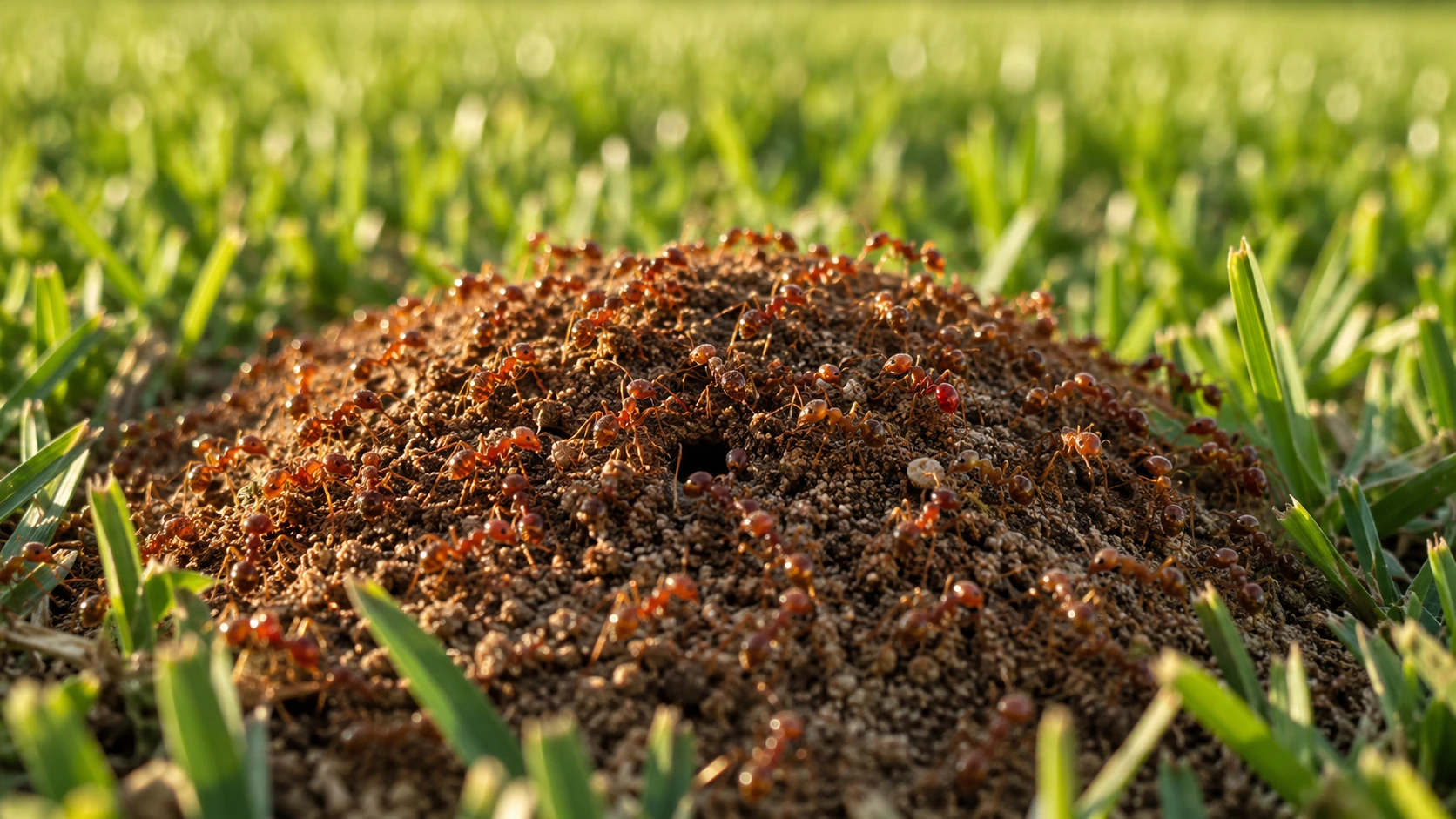
If you have a yard in Davenport, fire ant season isn’t something you can afford to ignore. These aren’t just nuisance ants — they’re aggressive, they sting in groups, and they build fast. One mound this week can become five mounds next week if conditions are right. And in Central Florida, conditions are almost always right.
This guide will walk you through exactly when fire ant season peaks in Davenport, what to watch for in your yard, and what actually works to stop them before they take over.

Ready to Take Back Your Home?
What Is Fire Ant Season in Davenport?
Fire ant season in Davenport doesn’t look the same as it does in states further north. Most people moving here from cooler climates expect a quiet winter — a break from insect activity. That’s not how it works in Central Florida.
Fire ants remain active year-round in Davenport. The colony never fully shuts down. What changes with the seasons is how aggressively the colony expands and how visible that expansion becomes in your yard.
That said, there are two periods every year where fire ant activity spikes significantly:
- March through May — Spring is peak fire ant season in Davenport. Warming soil temperatures trigger rapid colony expansion. Queens ramp up egg production. New mounds appear overnight, often in lawns that looked completely clear the week before.
- September through October — A secondary spike hits in early fall. Colonies that were driven deeper into the soil by summer heat resurface aggressively as temperatures become more comfortable.
If you’re going to get stung, it’s probably going to happen during one of these two windows. And if you have kids or pets who use the yard regularly, that’s not a risk worth taking.
Why Fire Ants Are a Bigger Problem in New Davenport Subdivisions
If you’ve recently moved into one of the newer subdivisions in the Davenport area — ChampionsGate, Reunion, or along the US-27 corridor — you may be seeing fire ant mounds appear even in areas that look well-maintained. There’s a reason for that.
New construction disrupts the soil in a way that fire ant colonies love. Grading, digging, and landscaping disturb existing underground colonies and scatter them across the site. When the homes are finished and the sod goes down, those displaced colonies find fresh, undisturbed lawn to establish in. New homeowners often inherit a fire ant problem that was there before they ever moved in.
According to the University of Florida IFAS Extension, the red imported fire ant (Solenopsis invicta) is one of the most widespread and economically significant invasive pests in the southeastern United States — and Central Florida is squarely in their territory.
How to Identify Fire Ant Mounds in Your Yard
Not every mound in your lawn is a fire ant mound. Big-headed ants, ghost ants, and other species also build near the soil surface. Knowing what you’re looking at matters — because the wrong treatment for the wrong species is a waste of time and money.
Here’s what a fire ant mound looks like in a Davenport yard:
- Dome-shaped and irregular — not perfectly round, usually 6 to 24 inches across
- No visible entry hole at the top — fire ants enter and exit through underground tunnels that extend outward from the mound
- Fluffy, loose soil texture — almost like disturbed potting mix
- Aggressive response when disturbed — if you touch or brush the mound, ants pour out immediately and begin stinging within seconds
Fire ants are reddish-brown, roughly 1/8 to 1/4 inch long, and they do not give warning before stinging. If you see a mound and you’re not sure, don’t step on it or kick it. Step back and call someone who knows what they’re looking at.
If you’re not sure which ant species you’re dealing with, our ant identification guide can help you narrow it down before you take any action.
What Happens If You Leave Fire Ant Mounds Alone
Some homeowners figure the mounds will sort themselves out. They won’t.
A single fire ant colony can contain anywhere from 100,000 to 500,000 workers. Left untreated through spring, a colony that started small in February can control a significant portion of your yard by May. Mature colonies also produce winged reproductives — called alates — that fly off to establish new colonies. One mound becomes many.
Beyond the lawn, fire ants are a legitimate safety concern:
- Children playing in the yard are particularly vulnerable. Fire ants sting repeatedly and in large numbers. A child who disturbs a mound can receive dozens or hundreds of stings within seconds.
- Pets are at risk too — especially smaller dogs who may not be able to move away quickly enough.
- For individuals with allergies, fire ant stings can trigger anaphylaxis, a life-threatening reaction requiring immediate medical attention.
If you want to understand the full risk picture, read our article on how dangerous fire ant stings really are.
Why DIY Fire Ant Treatments Often Make Things Worse
Walk down any hardware store aisle in Davenport and you’ll find a row of fire ant products. Most of them will do something. Very few of them will solve your problem.
Here’s the issue with most over-the-counter fire ant treatments:
Individual mound treatments alone miss most of the colony. The mound you see is not where the queen lives. She’s typically several feet underground, well insulated from surface-applied products. Treating the mound knocks back the worker population temporarily but doesn’t eliminate the colony. Within weeks, the mound is back — or a new one appears nearby.
Repellent sprays cause colony splitting. Some fire ant species will split into multiple satellite colonies when they detect chemical repellents in the soil. You treat one mound and end up with three.
Broadcast baits work, but timing matters. Granular broadcast baits — applied across the entire lawn rather than to individual mounds — are significantly more effective because foraging workers carry the bait back to the queen. But the bait needs to be fresh, applied at the right temperature, and left undisturbed for weeks to work properly.
Professional fire ant treatment combines targeted mound treatments with broadcast baiting programs calibrated for Davenport’s specific conditions and applied at the right point in the seasonal cycle.
When Should You Call a Professional for Fire Ant Season?
You don’t have to wait until you’ve been stung or your yard is covered in mounds. In fact, the best time to call is before fire ant season peaks.
A pre-season perimeter treatment applied in late February or early March — right before the March–May surge — gives your yard the best chance of staying mound-free through the most aggressive part of the season. Think of it like getting ahead of a storm instead of cleaning up after one.
Call sooner if you notice any of the following:
- More than one or two mounds visible in your yard
- Mounds appearing near high-traffic areas like play sets, garden beds, or walkways
- Children or pets have been stung
- You’ve already tried a store product and the mound came back
For year-round protection, ask about our prevention plan — a quarterly service designed specifically for the Central Florida ant pressure cycle that keeps your yard treated through every season, not just the peak.
Protect Your Yard This Fire Ant Season
Fire ant season in Davenport is predictable. It peaks in spring, spikes again in fall, and runs at a low simmer the rest of the year. The homeowners who stay ahead of it are the ones who act before the mounds appear — not after.
If you’re seeing mounds now, don’t wait. If you haven’t seen mounds yet but you have kids or pets who use your yard, don’t wait. One call gets a technician out to assess your yard, identify what you’re dealing with, and apply the right treatment for what fire ants in Davenport actually respond to.
For more on the types of ants you might be dealing with in Davenport, visit our ant identification guide or head to our fire ant treatment service page to learn exactly what our treatment process looks like.