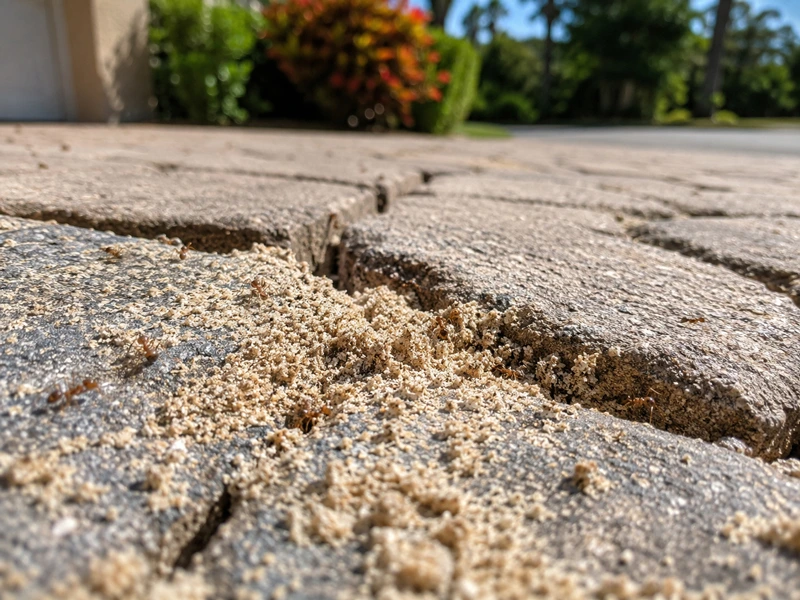



The first thing most Davenport homeowners notice isn’t the ants — it’s the soil. Fine, sandy grit appearing through the joints between paver bricks. Small piles of displaced dirt at the edge of the driveway where it meets the lawn. Gritty material pushing up through tile grout lines on a garage floor. By the time you look closely enough to connect it to ants, the colony is usually already established well beyond what’s visible at the surface.
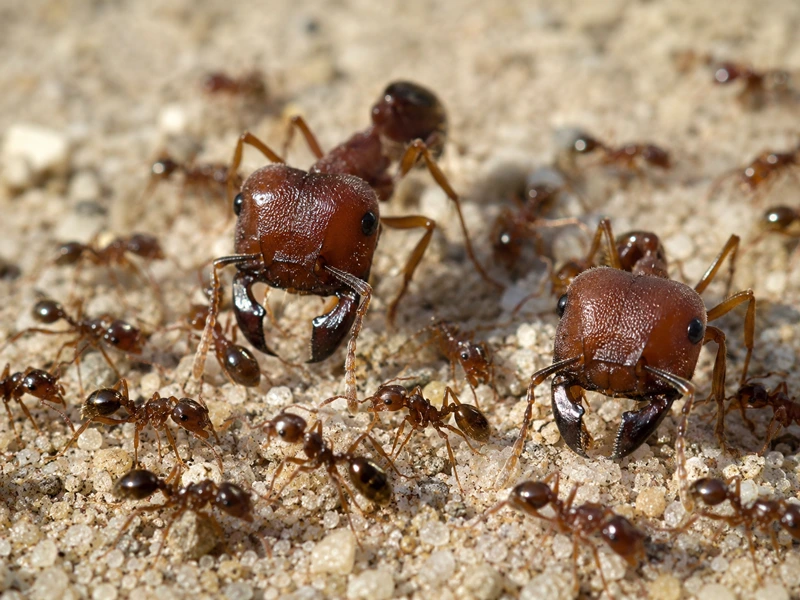
Big-headed ants (Pheidole megacephala) are named for the major workers — soldiers with disproportionately large, blocky heads packed with mandible muscles that make up a small but visually distinctive portion of the trail. When you see a trail of small reddish-brown ants and notice a few noticeably larger ones with oversized heads mixed in, that’s your identification confirmation. They don’t sting, and their bite is weak — but the colony structure and the damage it causes to hardscapes makes them one of the more consequential ant species in Davenport’s newer subdivisions.
Pheidole megacephala is listed on the IUCN’s list of the world’s 100 worst invasive species — and in Central Florida it has displaced fire ants and white-footed ants across significant portions of the landscape. University of Florida IFAS research confirms populations across Polk County and most surrounding Central Florida counties. The species first arrived in Florida in the late 1800s and accelerated its spread dramatically during the major hurricane seasons of the mid-2000s, when destroyed lawns and landscape replacement brought massive quantities of infested sod and nursery stock from south Florida into Central Florida subdivisions. Davenport’s ongoing new construction — importing fresh sod, ornamental plants, and fill dirt regularly — keeps introducing new colony pressure into the area.

Ready to Take Back Your Home?
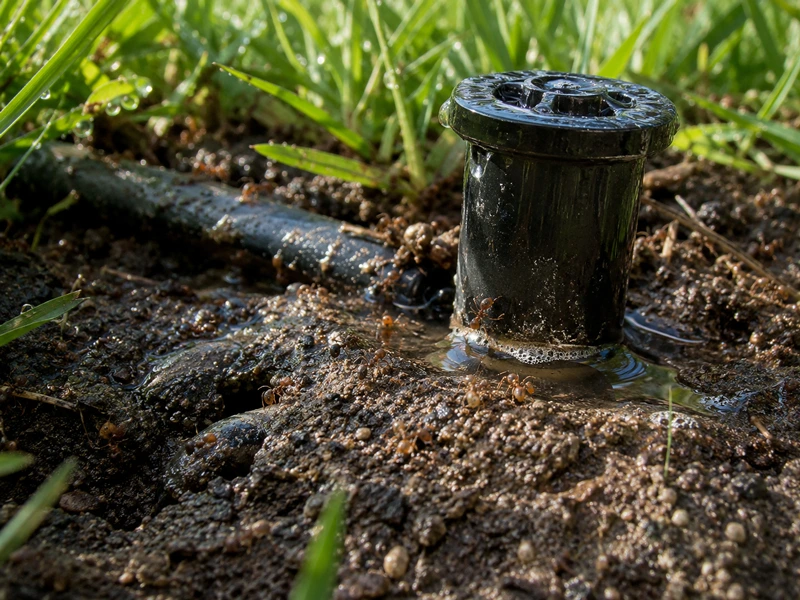
What makes big-headed ants particularly damaging to Davenport properties is their tunneling behavior. The colony excavates under hardscapes — under paver driveways, pool decks, sidewalk slabs, and patio surfaces — displacing the compacted sand bedding underneath. Over months and years, this causes pavers to shift, settle unevenly, and crack. Grout joints widen. Pool deck surfaces develop soft spots. The damage looks like settling or poor installation until you look closely and find the ant activity underneath. Irrigation lines and low-voltage wiring running below the surface can also be damaged as the colony tunnels through the soil around them.
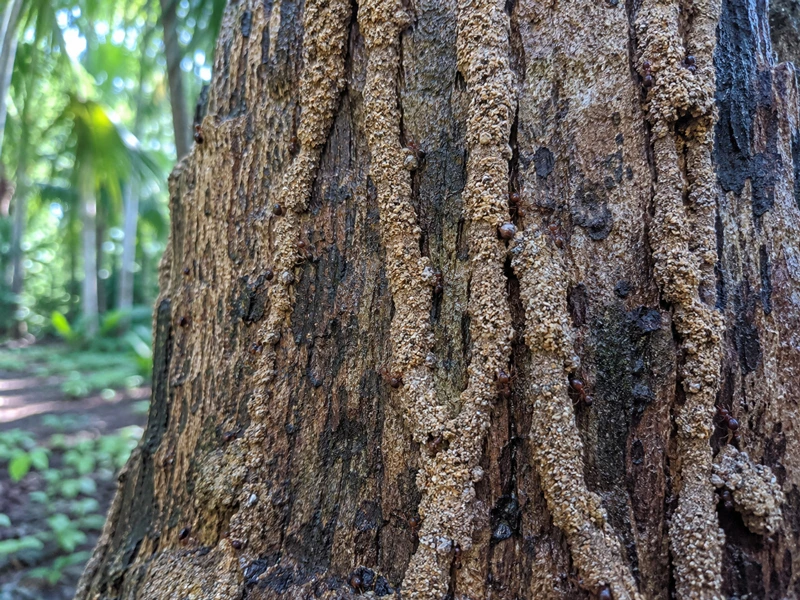
Homeowners frequently mistake the soil tubes that big-headed ants build on tree trunks and exterior walls for subterranean termite tubes — an understandable error since they look nearly identical. The difference is that big-headed ant tubes contain live ants moving through them, while termite tubes are typically sealed and used as protected travel corridors. If you’ve spotted mud-like tubes on your exterior walls or palm trunks and you’re not certain what you’re dealing with, our ant identification guide covers the distinguishing features, and a professional inspection will confirm definitively.
DIY control of big-headed ants consistently fails because the infestation is never limited to the visible area. The supercolony spreads underground across your entire lawn and often onto neighboring properties — meaning the mound entries and trails you can see represent a fraction of the colony’s actual footprint. Repellent sprays kill the surface workers and cause the colony to bud and relocate deeper, making subsequent treatment more difficult. Effective treatment requires applying the right product — UF/IFAS field research shows that fipronil and bifenthrin-based products applied across the full lawn and ornamental beds are significantly more effective than consumer pyrethroid products — across the entire property, not just at the visible trail.
Our perimeter treatment service covers the foundation perimeter and slab edges where big-headed ants most commonly establish entry routes, and our prevention plan maintains quarterly treatment across the full property to address the supercolony network rather than individual mounds. For homes in newer Davenport subdivisions where fresh sod and landscaping introduced the colony in the first place, consistent quarterly treatment is the only reliable way to keep big-headed ant pressure from re-establishing after each treatment cycle.
If you are also seeing mound activity in the lawn and want to confirm whether you’re dealing with big-headed ants or fire ants — both can have similar surface indicators — our fire ant season guide and ant identification guide cover the key differences. Big-headed ants don’t sting; fire ants absolutely do. That single behavioral difference, combined with the presence or absence of large-headed soldiers in the trail, is usually enough to tell them apart.
Same-day service available throughout Davenport, Haines City, Winter Haven, ChampionsGate, and surrounding communities.